Sarapiquí
Sarapiquí
Sarapiquí, in the northern Caribbean region of Costa Rica, combines lush rainforest, abundant wildlife and rivers ideal for rafting. An accessible destination from San José, perfect for 2 to 3 days of immersion in nature.
Sarapiquí is a region in the northern Caribbean of Costa Rica, drained by the Sarapiquí River, a tributary of the San Juan. Between humid tropical rainforest, river channels and banana and pineapple plantations, it concentrates exceptional biodiversity. It is one of the most accessible zones in the country to observe wildlife—monkeys, sloths, toucans, poison dart frogs—in an environment still largely untouched by mass tourism.
Practical information at a glance
- Access from San José: approximately 2 hours by road via the Braulio Carrillo Highway (Route 32 then 4); regular buses depart from the Gran Caribe terminal.
- Relatively dry season: March-April; the region receives rainfall year-round—bring a rain jacket and boots.
- Recommended duration: 2 to 3 days to combine rafting, hiking and wildlife observation.
- Clothing: lightweight long-sleeved garments, insect repellent essential.
What you'll see
Humid tropical rainforest covers most of the territory. Along the Sarapiquí River and its tributaries, kayaking or tubing trips allow you to get close to riverside vegetation. Lodges set at the forest edge offer night excursions to observe poison dart frogs and tree snakes. Agricultural plantations, omnipresent throughout the region, reflect the local economy.
History and context
Sarapiquí was long a transit route between the central plateau and the Caribbean coast, used by traders before modern roads were built. Puerto Viejo de Sarapiquí, the main town, was an active river port in the 19th century. The region experienced intensive agricultural colonization in the 20th century, transforming tracts of primary forest into banana and pineapple zones. Reforestation and private conservation efforts have since restored biological corridors.
Highlights of your visit
Rafting and kayaking on the Sarapiquí River
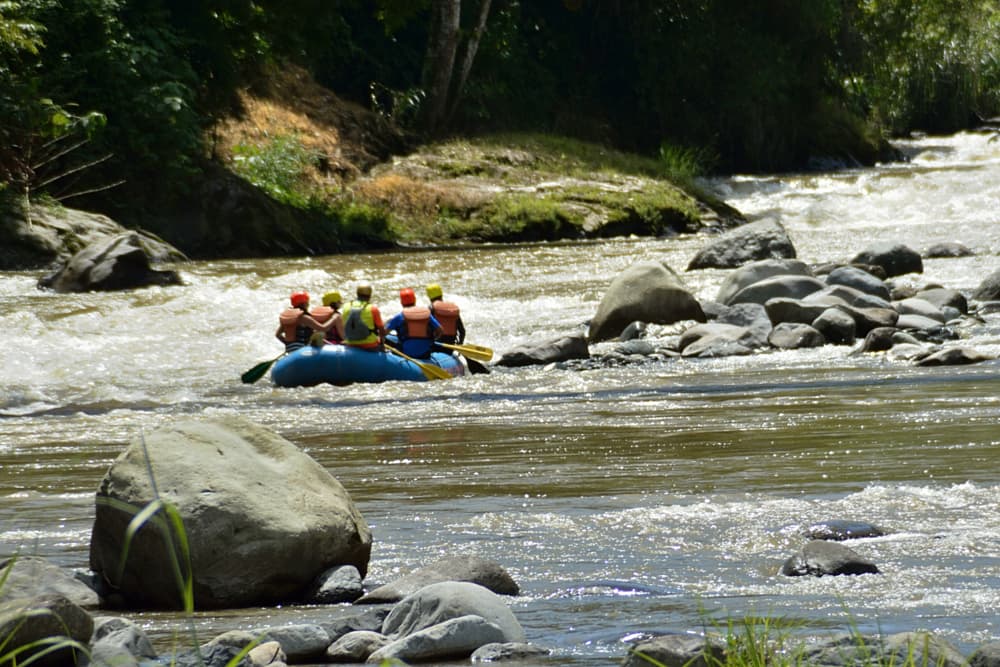
The Sarapiquí River offers Class II to IV rapids depending on the season and section chosen. Local outfitters organize guided descents suited to all skill levels. Riverside wildlife—kingfishers, herons, iguanas—is visible from the water.
Wildlife observation in the rainforest
All four monkey species found in Costa Rica (howler, capuchin, spider and squirrel monkeys) inhabit this region. Dawn hikes guided by local naturalists maximize observation opportunities. Poison dart frogs (Dendrobates pumilio) can be spotted in the moist forest litter.
La Selva Biological Station
Managed by the Organization for Tropical Studies (OTS), this private research station opens its trails to visitors. Over 400 bird species have been recorded here. Scientific guides offer themed tours on tropical biology.
Tirimbina Rainforest Center
This private conservation center features suspended walkways above the Sarapiquí River and specialized night tours focused on bats and frogs. A hanging bridge crosses the river through the canopy.
Photography tips
Light in tropical rainforest is diffuse and dim under thick canopy. Prioritize early morning hours for active wildlife and raking light on the river. A fast lens (f/2.8 or wider) compensates for dense shadow. Brightly colored poison dart frogs photograph well at ground level with a wide-angle or macro lens. Avoid direct flash on nocturnal animals.
Location and access
Sarapiquí is located in Heredia province, in the northeast of Costa Rica, bordering Nicaragua. Puerto Viejo de Sarapiquí is the main urban center. The road from San José passes through Braulio Carrillo National Park, already offering views of cloud forest. Private shuttles connect San José to major lodges. No commercial airport serves the area; Juan Santamaría International Airport in San José remains the entry point.
Nearby accessible places: Braulio Carrillo National Park (on the route from San José), Poás Volcano (accessible as a half-day trip from the central plateau).
Around the area
- Braulio Carrillo National Park — cloud forest crossed by the main highway, with trails and waterfalls.
- La Fortuna / Arenal — active volcano and hot springs, approximately 3 hours west by mountain road.
- Tortuguero — national park accessible by river route from Sarapiquí, renowned for sea turtle nesting.
Frequently asked questions
The region is humid year-round. March and April offer slightly less rainfall. For rafting, the rainy season (May-November) swells the rivers and intensifies the rapids.
A local naturalist guide is highly recommended: they spot wildlife camouflaged and invisible to the untrained eye and know the trails. La Selva and Tirimbina offer certified guides on-site.
Yes. A river route connects Sarapiquí to Tortuguero via the Sarapiquí River and Caribbean canals. This boat journey is itself a wildlife observation experience.
Some sections of the Sarapiquí River suit beginners (Class II). More technical sections (Class III-IV) require reasonable physical fitness. Local outfitters will guide you based on your level.
Waterproof hiking boots, high-concentration insect repellent, long-sleeved clothing, poncho or lightweight rain jacket. Binoculars are essential for birdwatching.
Want to discover this destination?
Our local advisors design your tailor-made trip.