Costa Rica: A Land of Adventure for Extreme Sports Enthusiasts!
30 Dec. 2024
Costa Rica is renowned for the diversity of its landscapes and its outdoor activities... Gliding sports (surf, kitesurfing, windsurfing), aerial sports (skydiving, paragliding, bungee jumping), underground explorations (caving, snorkeling or scuba diving): the land of Pura Vida is THE destination for lovers of adrenaline-pumping experiences!
1. Rafting and Kayaking on the Pacuare or Sarapiquí Rivers
While the río Pacuare originates in the Talamanca mountain range, the río Sarapiquí rises in the Central Cordillera – on the slopes of the Poás volcano… What do they have in common? Both rivers can be explored by rafting or kayaking! These two sports, though similar, are distinguished by their approach:
● Kayaking (a narrow vessel) suits those who prefer to navigate alone or in pairs, paddling to navigate rapid sections with complete autonomy.
● Rafting (an inflatable raft) emphasizes teamwork: aboard a flexible raft (accommodating up to ten people), you follow the guidance of an experienced guide to conquer the currents.
Beyond delivering adrenaline rushes, both activities allow you to discover Costa Rica's landscapes from a fresh perspective – and create wonderful memories during a family or friends' getaway.
| Note There is no age limit for rafting, provided you can swim. For comparison, the average minimum age in France is 8 years old. Kayaking is a more or less tranquil activity, depending on the location. If you're paddling in whitewater, this water sport may not be ideal for younger children. |
|---|
2. Exploring the Monteverde Canopy
Nicknamed the "cloud forest," the Monteverde canopy can be admired during a zipline adventure or a walk through the treetops! Located within the Monteverde Biological Reserve, this lush site promises an atypical experience – and a superb observation spot, where you can see howler monkeys, sloths, and numerous bird species.
Ziplining
Created in 1970 by two biodiversity researchers – who wished to move quickly between trees – ziplining (or Canopy tour) is today one of Costa Rica's must-do attractions.
How does this "eco tram" work? A pulley suspended by cables that gain speed on a slope, thanks to gravity and the traveler's weight. Depending on the slope's incline, the zipline moves at varying speeds – yet slowly enough to admire wildlife and flora.
There are roughly fifteen installations in the canopy. These ziplines are situated on average 140 meters above the ground. Among the primary platforms:
● Arenal (Alajuela),
● Nosara (Guanacaste),
● Poás (Central Valley region).
| Note Ziplining is safe and quite serene, provided you're not afraid of heights and weigh at least 50 kilograms. In Costa Rica, this activity is accessible from age 6. |
|---|
Suspended Bridges
Another way to experience the cloud forest canopy is by crossing one of the numerous suspended bridges. Situated roughly 50 meters above ground, these trails offer breathtaking views of wildlife – including several animals invisible from the forest floor.
There are many suspended bridges throughout Costa Rica, beyond those of Monteverde. These are primarily concentrated in the country's north, within national parks.
| Note A canopy walk is an activity accessible to everyone, even those with a fear of heights! Thanks to the density of lush vegetation, the sensation of emptiness is diminished. |
|---|
3. Mountain Biking (Mountain Bike Trek)
Mountain biking is a widespread activity in Costa Rica. This extreme sport allows you to explore the country's numerous reliefs and their varied landscapes. The three most sought-after trails?
● 1. Las Catalinas (Guanacaste): this circuit crosses verdant hills and forests, where coatis and tropical bird species can be spotted.
● 2. Rincón de la Vieja (spanning the provinces of Guanacaste and Alajuela): this volcanic course combines technical challenges, otherworldly landscapes, and dense forests. You can spot armadillos and the Oropendola waterfall.
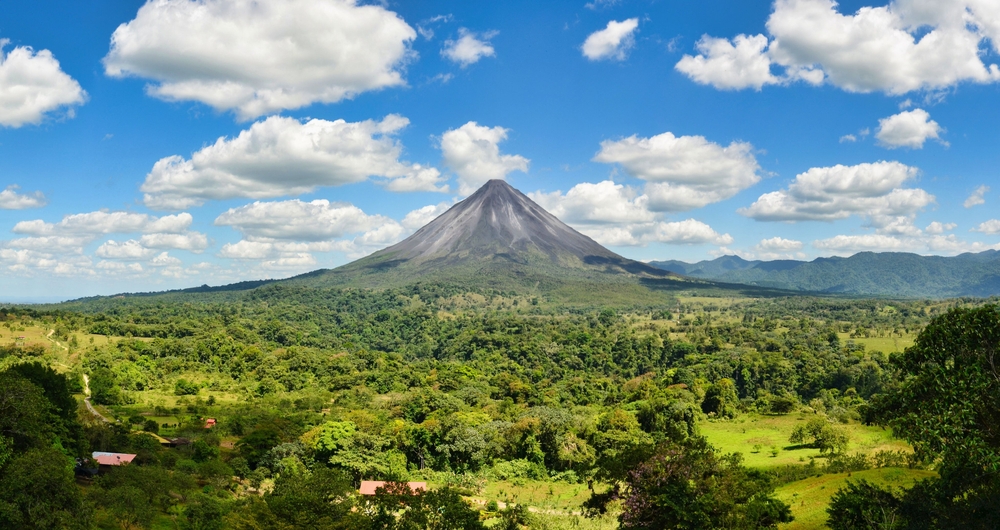
● 3. Arenal (Alajuela): the Arenal volcano region is renowned for its rugged landscapes, composed of tropical forests and waterfalls, such as the río Fortuna with its 70-meter drop. Plan for approximately 3 hours of mountain biking over 16 kilometers.
| Note Mountain biking is an activity accessible to all, provided you have good physical fitness. Ideally, this sport is recommended for ages 10–65. |
|---|
4. Scuba Diving and Snorkeling
Scuba diving and snorkeling are two flagship activities in Costa Rica. Blessed with sublime underwater landscapes, the country is rich with spots where you can admire coral reefs and countless multicolored fish.
● Cahuita National Park is celebrated for its stunning coral reef.
● Isla del Caño National Park (offshore along the Pacific coast). Designated as a UNESCO World Heritage Site, the location is renowned for its incredible biodiversity. You can encounter manta rays, sea turtles, and hammerhead sharks.
● Isla del Caño is a protected zone situated in Drake Bay. The site harbors tropical fish, coral, turtles, and eagle rays… The island is ideal for scuba diving or snorkeling.
● Isla Tortuga: a must-visit destination for scuba diving in Costa Rica, this island lets you admire endemic fish, as well as three shipwrecks…
| Note As a reference, France's federation for underwater study and sports (FFESSM) indicates that scuba diving is permitted in France from age 8. |
|---|
5. Caving
Costa Rica is also a premier destination for caving. Among its most renowned sites:
● Barra Honda National Park. Located in Guanacaste province, this natural gem shelters an extensive network of caves dating back 60 million years, spanning over 2,500 hectares! About twenty caves can be explored – including Cueva Terciopelo.
● Venado Caves: situated in Alajuela province, this cavern (featuring multiple chambers) allows you to observe marine fossils and bats!
| Note Most sites are accessible from age 4. For younger children, choose a short excursion (some routes last an entire afternoon or full day). This activity is inadvisable for those with claustrophobia, back pain, or heart conditions. |
|---|
6. Canyoning
Expeditions through gorges and caverns, climbing, rappelling, sliding, and hiking: canyoning promises a multidisciplinary adventure through Costa Rica's canyons! An opportunity to explore mountainous regions and picturesque areas such as:
● Uvita, for an unforgettable adventure deep within lush nature!
● Turrialba, for hikes dotted with waterfalls and natural pools in the turquoise waters of the río.
| Note As a reference, the average age for canyoning in France is 13 years. It depends on the route's difficulty and duration. This activity requires good physical fitness and swimming ability. |
|---|
7. Jumping Sports
Skydiving
If you crave adrenaline-pumping experiences: why not attempt a skydive during your Costa Rica trip!? By soaring over its verdant jungles and volcanic massifs, you'll enjoy 360° views of the country's high plateaus – plus its coastlines and charming port cities.
Note that it's also possible to jump in the famed Manuel Antonio park… After an adrenaline-fueled freefall, you can admire this vast 16 km² expanse dotted with white sand beaches, reefs, and its whale-tail-shaped peninsula – visible only from the sky.
| Note As a reference, the minimum weight to skydive in France is 40 kg (and 95 kg maximum). The minimum age is 15 years old. |
|---|
Bungee Jumping
Costa Rica is often associated with the famous character of Tarzan – thanks to its numerous canopy and aerial activities. To slip briefly into the skin of this iconic hero: try bungee jumping! Perched nearly 150 meters above the void, you need only leap into the air while attempting the character's famous call...
| Note As a reference, the minimum weight for bungee jumping in France is 40 kg (and 120 kg maximum). A medical certificate is required for those over 55 – if this applies to you, consult your doctor before your trip. |
|---|
8. Paragliding
Paragliding is an aircraft derived from parachuting, but unlike the latter, you don't jump – you fly! How? By using ascending air currents to glide – or gain altitude. To try this unique experience: head to the port coast of Caldera (in Puntarenas) or the beach resort of Jaco.
| Note As a reference, the minimum age for paragliding in France is 14 years old. |
|---|
9. Surfing
Costa Rica is equally a dream destination for surfers, with its numerous spots and rolling waves. Here's an overview of the most sought-after locations, by geographic area.
● Central and South Pacific Coast: known for its impressive waves and proximity to the capital, this part of Costa Rica is renowned for surf spots Playa Hermosa, Dominical, and Playa Pavones
● Caribbean Coast: less frequented, this zone is wilder and more authentic. Its most popular surf spots? Playa Negra and Playa Cocles!
● North Pacific Coast: reputed for spots suited to all levels, this region features several popular glide locations, such as Tamarindo, Playa Grande, Las Baulas National Park, Playa Avellanas, and Playa Hermosa.
Costa Rica also hosts numerous surf camps.
| Note Surf lessons are accessible from age 5, provided you can swim. |
|---|
10. Other Gliding Sports
Wakeboarding on Lake Arenal
An extreme sport typical of Costa Rica? Wakeboarding on Lake Arenal! Regarded as one of the world's best wakeboarding lakes, the site promises wonderful sporting memories. Don't worry: the basics are learned fairly easily – after some initial fumbles, it's common to find your balance and enjoy all the adrenaline sensations that wakeboarding provides…
| Note Wakeboarding is suitable from age 7. |
|---|
Kitesurfing
Another gliding sport widespread in Costa Rica: kitesurfing. Practiced on both sides of the country (Pacific and Caribbean), this water activity offers the same sensations as surfing, except you're propelled by wind force, thanks to a kite. One of the most popular spots for this discipline is Salinas Bay (bahia Salinas) – in Guanacaste province.
Windsurfing
Also wind-driven, windsurfing isn't practiced on a surfboard, but on a sail board. Lake Arenal is, once again, the ideal spot to enjoy this water sport. Salinas Bay is also highly favored.
| Note As a reference, kitesurfing and windsurfing are taught to children at least 8 years old in France. |
|---|
What Is the Best Time to Visit Costa Rica?
Costa Rica is a sun-drenched country year-round (with an average temperature of 25°C). However, one season may be preferable to another, depending on the experiences you wish to enjoy during your trip.
● Aerial sports: if you wish to skydive or paraglide, avoid the rainy season (or temporada lluviosa in Costa Rican Spanish) occurring between May and November.
● Diving and snorkeling: it's possible to explore underwater worlds in all seasons. Nevertheless, if this is the leitmotif of your stay, favor the dry season to enjoy sunny days, as well as calmer seas and oceans.
● Surfing: on the Atlantic Ocean side, the best period for surfing is between April and August. On the Caribbean side, aim for November–March.
● Kitesurfing and windsurfing: to fully enjoy the wind conducive to these two water sports, opt for the period between October and May.

Frequently Asked Questions
What's the Budget for 15 Days in Costa Rica?
The budget for a fifteen-day Costa Rica trip depends on your desired comfort level. For an economical journey, plan approximately €2,500 per person (excluding airfare).
What's the Best Place to Stay in Costa Rica?
Costa Rica brims with countless natural attractions worth visiting. Among the most sought-after: the "cloud forest" (Monteverde canopy), the Nicoya Peninsula, and Arenal volcano.
What Is the Most Beautiful Part of Costa Rica?
Every part of Costa Rica deserves your attention! Here's a (non-exhaustive) list of iconic places not to miss: the Osa Peninsula, Monteverde Biological Reserve, Irazú volcano (and its 5 craters), the capital San Jose, Manuel Antonio National Park, and the caves of Barra Honda National Park.
Audrey Denjean
Audrey DENJEANAs an English-speaking SEO web writer, Audrey Denjean uses her writing to serve travelers. Through her blog articles, she explores what defines a country's soul – its iconic sites, cuisine, traditions, history… Her goal? To convey far more than mere tourist information, but to describe an atmosphere, share anecdotes that make each country unique, and inspire readers, after every piece, to explore the world.