Marino Ballena National Park
Marino Ballena National Park
On Costa Rica's southern Pacific coast, Marino Ballena National Park combines a whale's tail tombolo, coral reefs and humpback whale watching from Uvita.
On the Pacific coast of Costa Rica, in Puntarenas Province, Marino Ballena National Park protects a shoreline renowned for the passage of humpback whales. With 110 hectares of land and 5,375 hectares of sea, it stretches between the town of Uvita and the Osa Peninsula, near Corcovado National Park.
Why visit Marino Ballena National Park
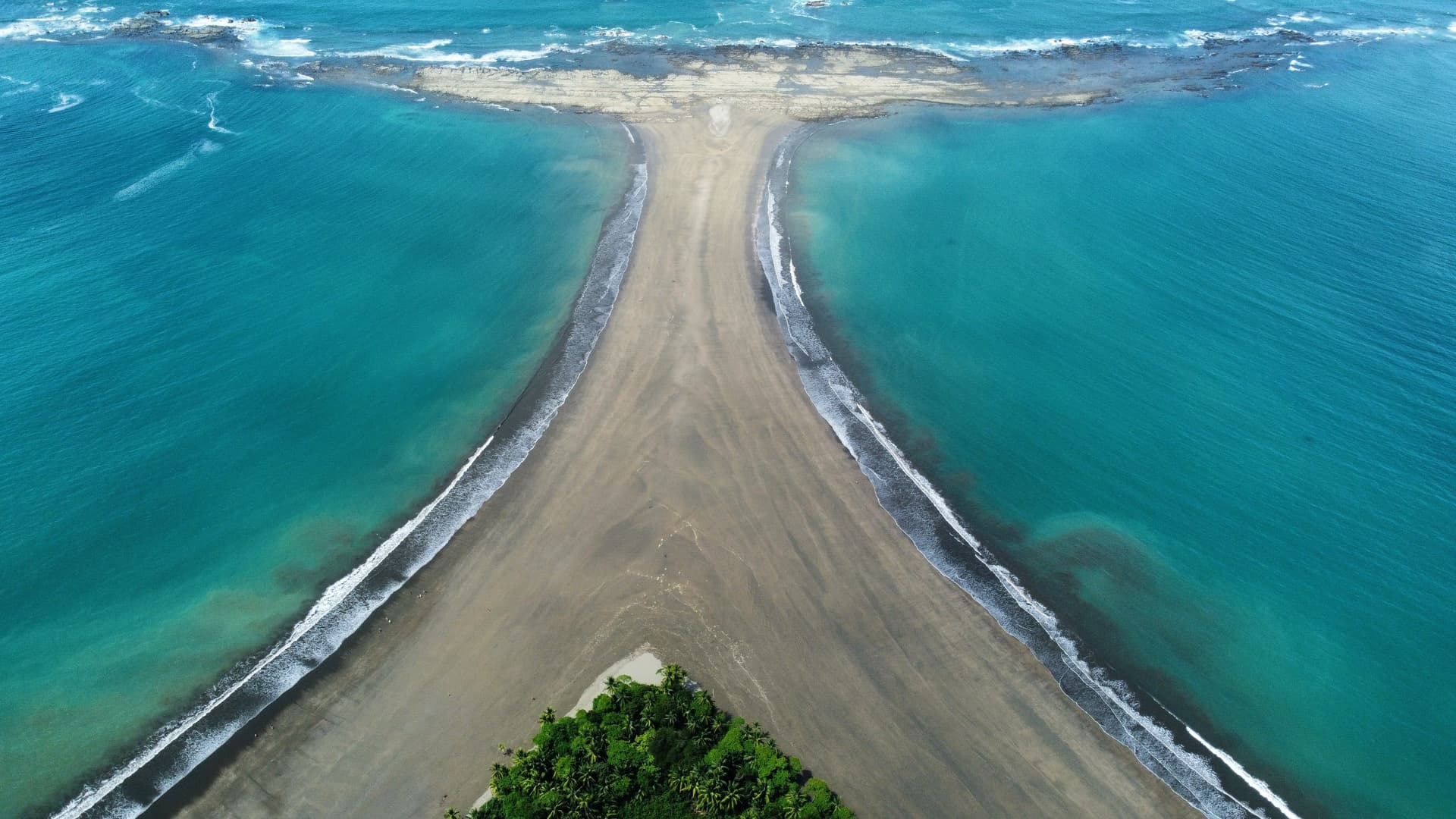
The park owes its reputation to a remarkable geographical phenomenon: viewed from the air, its shoreline traces the shape of a whale's flipper. The Punta Uvita tombolo, nicknamed the whale's tail, is a sandbar that forms at low tide and connects the coast to a rocky islet. The site also coincides with a humpback whale migration zone, making it one of the most reliable observation points in Central America.
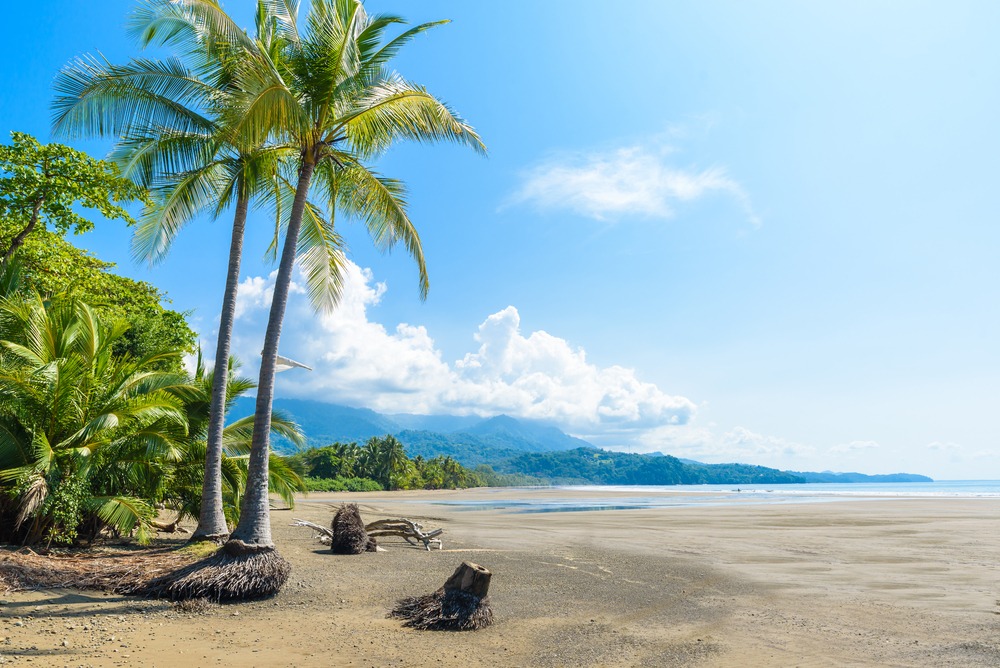
Beyond the cetaceans, the park combines beaches, mangroves and organic reefs (formed by rocks rather than living corals), with dense biodiversity in the forest backdrop.
History and creation
The park was established on February 6, 1989 as Costa Rica's first maritime national park, then officially declared a protected area on December 14, 1989. Its creation aimed to preserve coastal marine diversity and a fragile ecosystem blending reefs, mangroves and terrestrial habitats.
Since then, it has become a sanctuary for large marine mammals and a scientific landmark for tracking humpback whale migration routes in the eastern Pacific.
What to see and do
The park's four sectors
- Uvita: the most frequented sector, gateway to the Punta Uvita tombolo and the famous whale's tail.
- Ballena: a beach exposed to more powerful waves, favored by experienced swimmers.
- Colonia: a quieter sector with no direct beach access, but interesting for its forest setting.
- Piñuela: a sheltered beach, ideal for families and calm swimming.
Whale and dolphin watching
Humpback whales frequent the area during two complementary seasons: August through November from Antarctica, then December through April from Alaska. Boat tours typically depart from the Uvita sector. Dolphins, meanwhile, are present year-round, making ocean excursions worthwhile even outside migration season.
Snorkeling, diving and terrestrial wildlife
The organic reefs harbor tropical fish, rays and sea turtles, accessible by snorkel or scuba diving. On land, the forest and mangroves shelter howler monkeys, white-faced capuchins, sloths, scarlet macaws, toucans, iguanas, crocodiles and otters. The mangroves, located at river mouths, are nesting grounds for numerous bird species.
When to visit
The park experiences a savanna climate (Köppen-Geiger classification) with a pronounced dry season. The driest and most comfortable months run from December through March, with daytime temperatures around 28 to 30°C (82 to 86°F).
For humpback whale watching, two windows stand out: August through November (southern population, often the most active) and December through April (northern population). The tombolo can be crossed on foot at low tide: it's helpful to check tide schedules before your visit.
Practical information
- Location: southern Pacific coast, main entrance at Uvita.
- Hours: daytime access, generally from morning through late afternoon.
- Fees: modest entrance fee, with reduced pricing for Costa Rican residents.
- Duration: allow half a day to explore one beach and the tombolo, a full day if you add a sea excursion.
- What to bring: biodegradable sunscreen, water, footwear suitable for walking in wet sand.
How to get there
From San José, two road routes are available:
- Route 34, Costanera Sur: via Jaco, Quepos, Dominical then Uvita. Allow approximately 3 hours of driving.
- Inter Americana Sur: via Cartago, San Isidro del General, Dominical then Uvita. Allow approximately 4 hours.
The Costanera route is the most direct and scenic. Long-distance buses serve Uvita from San José, and local taxis or shuttles can arrange the final connection to the park entrance.
Nearby attractions
- Uvita: base town for the park, with accommodations and restaurants.
- Caño Island: marine biological reserve accessible by boat, renowned for diving.
- Corcovado National Park: dense primary forest on the Osa Peninsula, one of the country's most biodiverse areas.
- Monteverde Reserve: cloud forest, a highland complement to the southern Pacific coast.
Frequently asked questions
Frequently asked questions
Two seasons: August through November for whales from Antarctica, and December through April for those from Alaska. September and October are often cited as peak activity months.
Yes, the Punta Uvita tombolo becomes accessible at low tide. It's advisable to check the day's tide schedules before venturing onto the sandbar.
Half a day is sufficient to explore one sector and the tombolo. To combine beach, snorkeling and a boat observation tour, plan for a full day.
Yes. The Piñuela and Uvita sectors offer calm beaches suited to family swimming. The Ballena sector, more exposed to waves, is better suited to experienced swimmers.
Yes, several dolphin species frequent the area year-round, making a boat tour worthwhile even outside migration season.
Plan your trip
Marino Ballena National Park fits easily into a southern Pacific coast itinerary, combined with Corcovado, Caño Island and the Osa Peninsula. To build a custom itinerary, explore our Costa Rica travel packages.
Interested in this visit?
We can include it in your personalised itinerary.