Arenal and Monteverde
Northern Costa Rica's volcanic landscape brings together the Arenal cone, its thermal springs, and the Monteverde cloud forest perched at 1,600 metres between mist and quetzals.
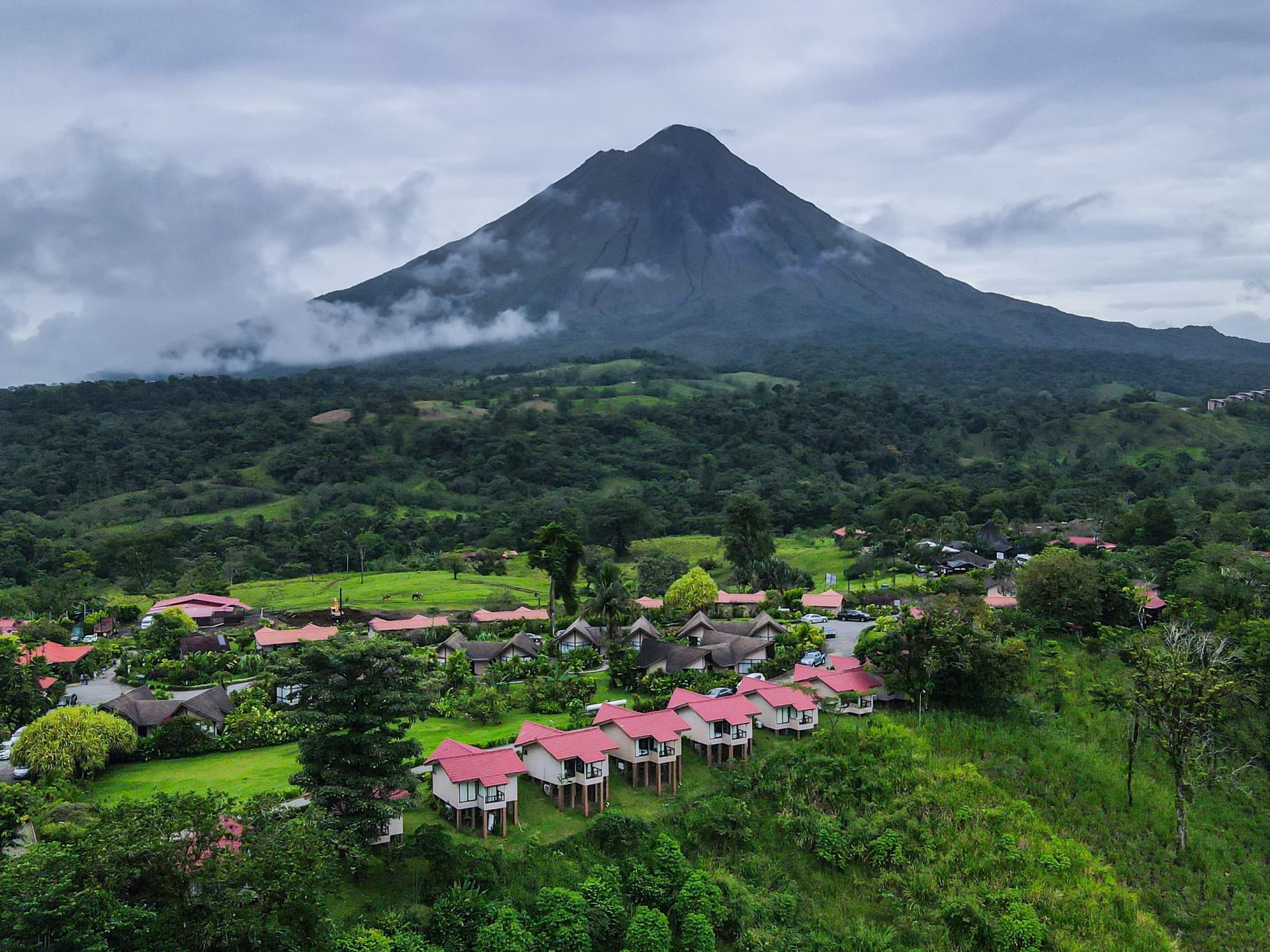
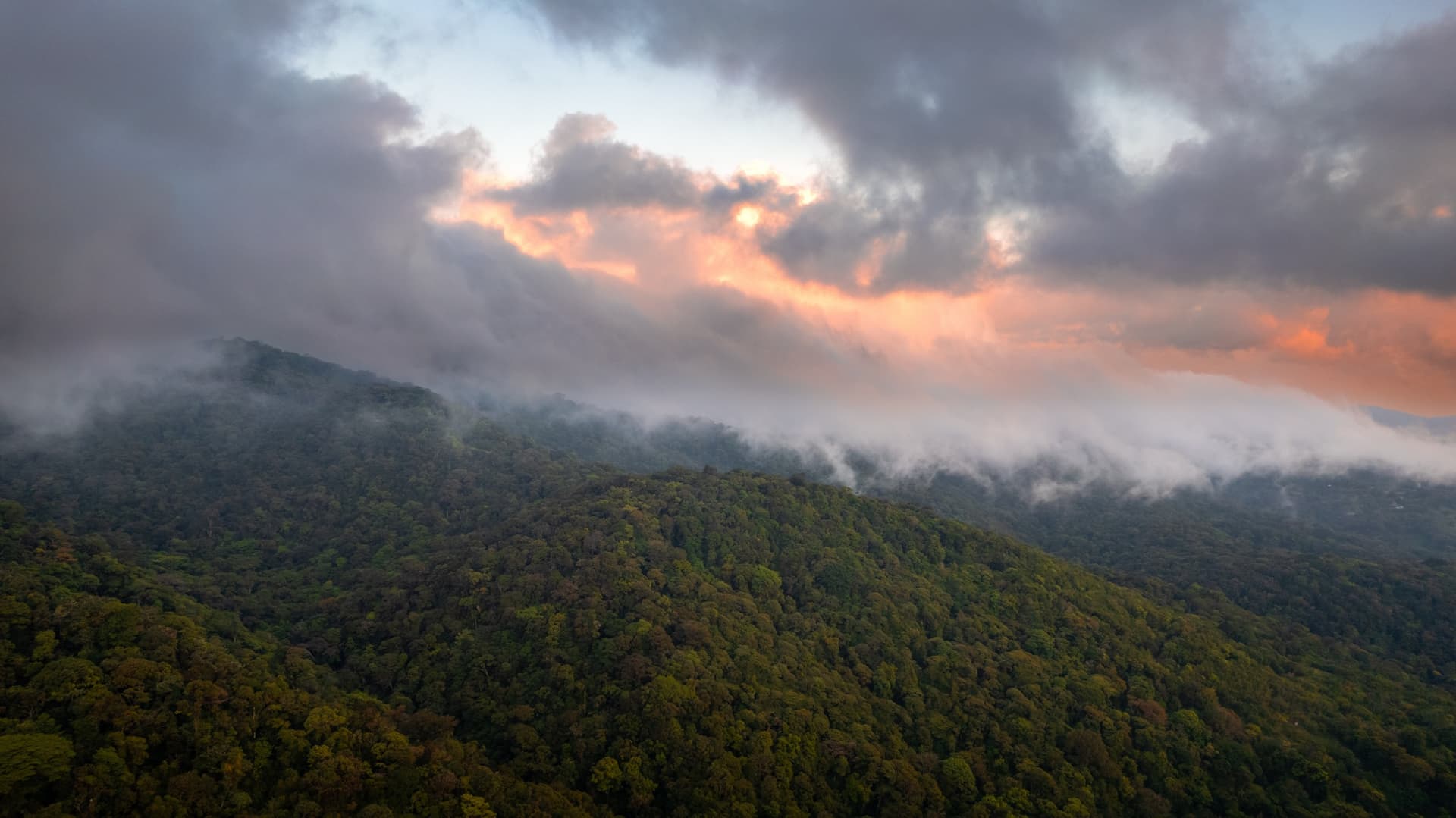
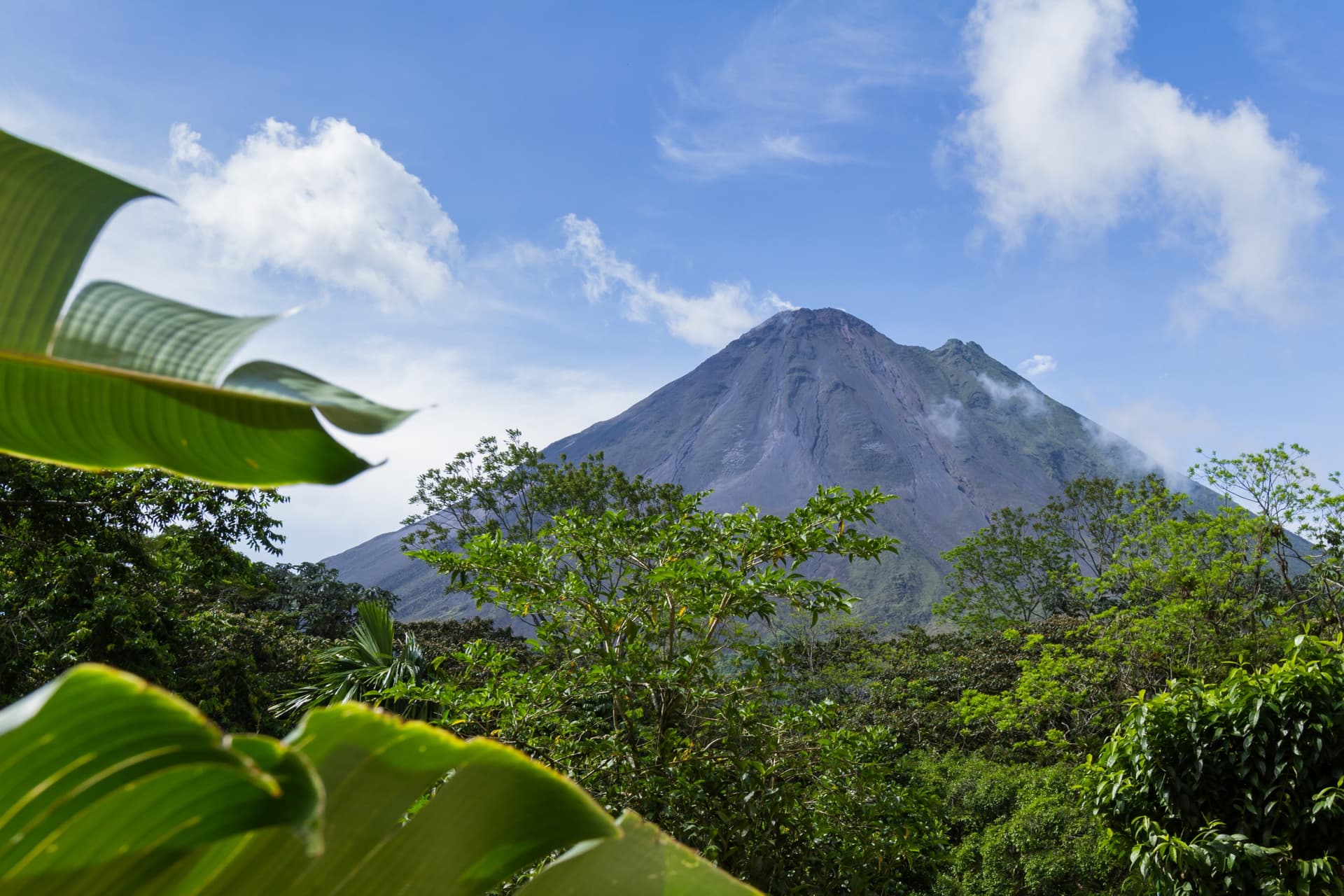
Northern Costa Rica's volcanic region concentrates, across a little over 100 kilometres as the crow flies, two ecosystems that are worlds apart. To the east, around La Fortuna de San Carlos, the Arenal volcano rises with its 1,670-metre cone above a plain of pastures and pineapple plantations. To the west, the Tilarán mountain range peaks at around 1,800 metres and plunges its ridges into near-permanent mist: this is the Monteverde cloud forest, perched on the watershed dividing the Caribbean and Pacific slopes.
Arenal has left its mark on the country. Its eruption in July 1968 destroyed the village of Tabacón and claimed 87 lives. The volcano remained active until 2010, when it entered a dormant phase. Today, Volcán Arenal National Park protects 12,124 hectares of humid tropical forest that has reclaimed the old lava flows. La Fortuna, a town of 15,000 inhabitants, lives off tourism and dairy farming. The geothermal springs circulating beneath the surface feed a dozen hot spring complexes, from the simplest (the free Río Chollín, roadside) to the luxury facilities of Tabacón and Baldi.
Three hours' drive to the southwest, you enter another world entirely. The track leading to Santa Elena, Monteverde's pivot village, climbs in hairpin turns over some twenty kilometres of unpaved road (paving work is progressing in sections). At the top lies a singular community founded in 1951 by North American Quakers fleeing the draft during the Korean War. They brought dairy farming to the highlands: the Monteverde Cheese Factory still produces around twenty varieties. English remains very much present, and Tico-Quaker bilingualism is part of the place's identity.
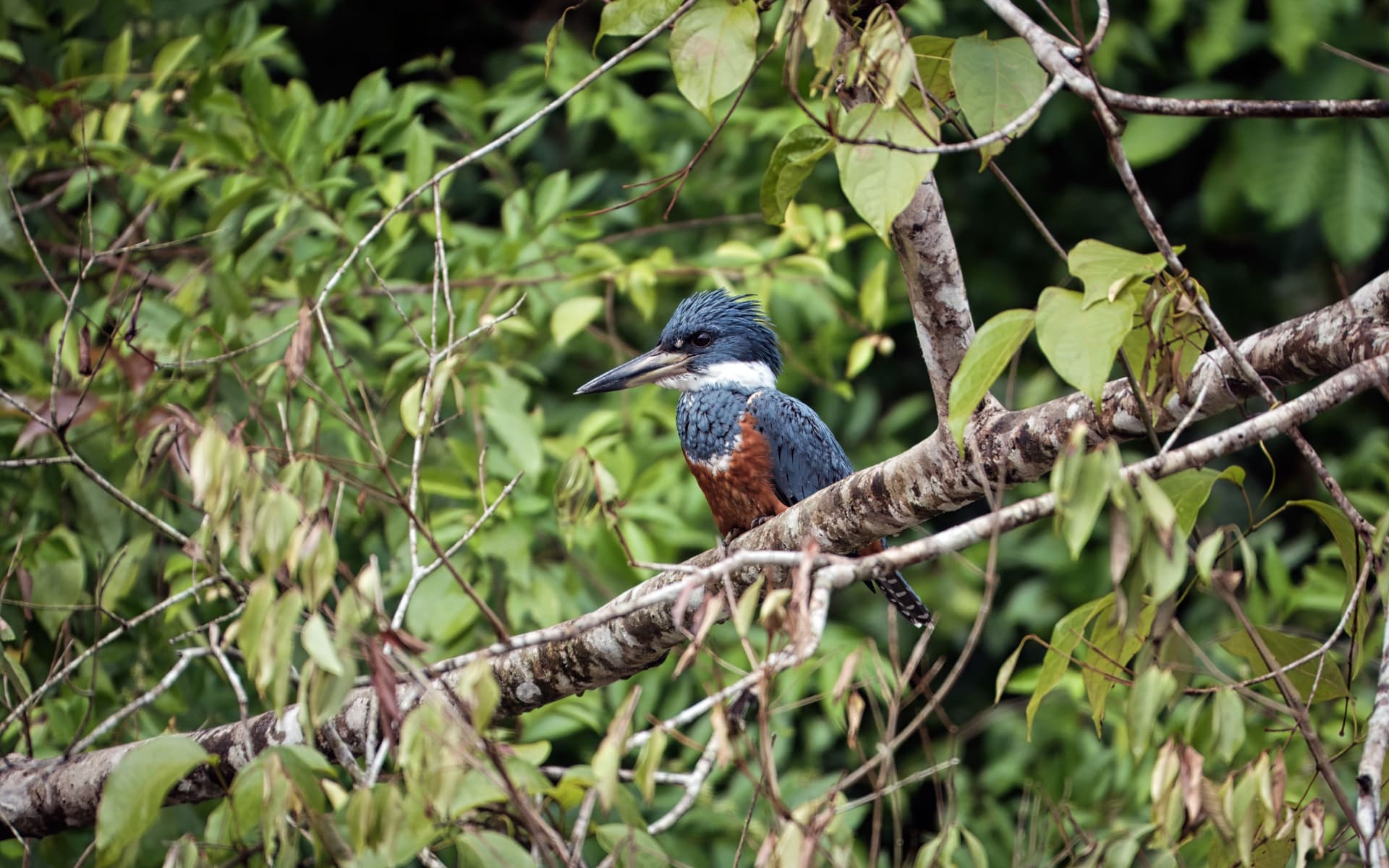
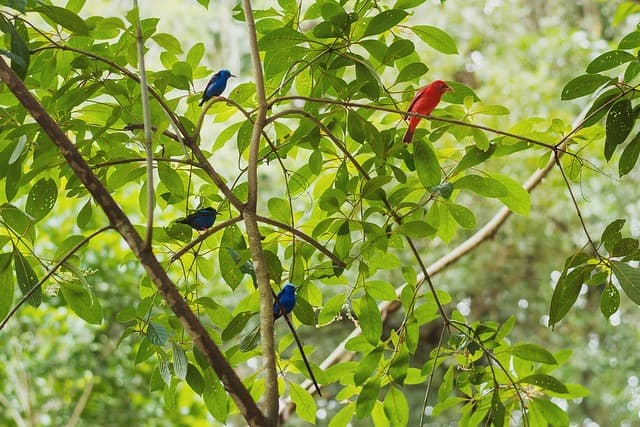
The Monteverde cloud forest is one of the country's most biodiverse ecosystems: 2,500 plant species, 400 bird species, and 100 mammal species recorded in the reserve. The resplendent quetzal, the emblematic bird of Central America's highland forests, nests here from March to May, the most reliable viewing period, often near aguacatillo trees at dawn. Hummingbirds congregate around the feeders at the Hummingbird Gallery. Alongside the Monteverde Biological Reserve, managed by the Centro Científico Tropical, the smaller and windier Santa Elena reserve offers clear views of distant Arenal volcano on clear days.
The climate differs markedly between the two zones. In La Fortuna, you stay in classic humid tropical conditions: 24 to 28°C during the day year-round, heavy rainfall from May to November. In Monteverde, altitude brings temperatures down: 14 to 18°C in the evening, sustained winds on the ridges from December to February, near-daily drizzle the rest of the year. A fleece jacket and waterproof coat are essential at altitude. On the dining front, you find classic Costa Rican staples (gallo pinto for breakfast, casado at lunch) enriched in La Fortuna by freshwater fish from Lake Arenal (tilapia, guapote) and in Monteverde by fresh cheeses and yoghurts from the Quaker cooperative.
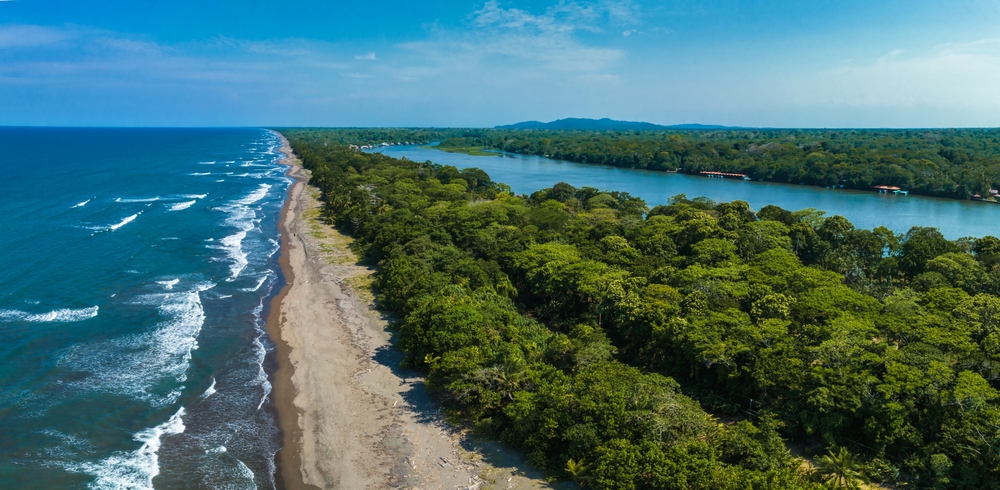
Between the two sits Lake Arenal, an 85 km² artificial reservoir created in 1979 to generate hydroelectric power, structuring the landscape. Crossing by boat-bus from the Río Chiquito landing, followed by a road transfer to Santa Elena, remains the fastest way to move between the two sites: allow 3 to 4 hours door-to-door, compared to 5 to 6 hours by paved road via Tilarán.
What to discover
Lava flow trails in Arenal Park. A 2 to 3-hour hike along the Coladas and Los Tucanes trails, crossing the 1992 lava flows and the secondary forest that has reclaimed them, with the volcano's cone always in view.
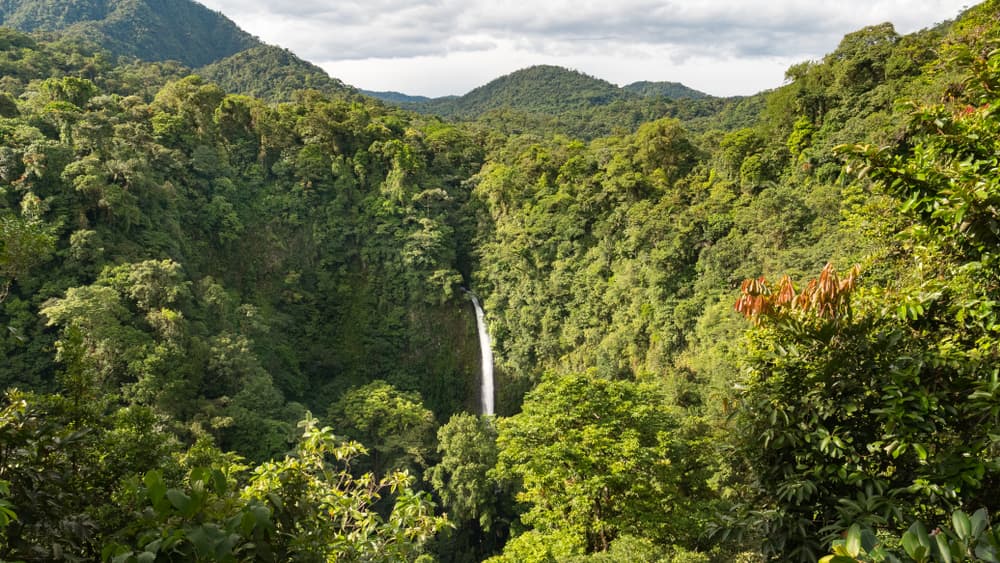
Río Fortuna waterfall. A 70-metre drop into a basalt canyon, accessed via 500 steps. Swimming possible in the pool below, water around 20°C, heavy foot traffic before 10 a.m.
Monteverde cloud forest at sunrise. Entry at 7 a.m. to the biological reserve to take advantage of the slanting light and morning bird activity, with a naturalist guide equipped with binoculars to spot the quetzal.
Sky Walk suspension bridges. A 2.5-kilometre course over six suspension bridges in the canopy, between 12 and 45 metres high, allowing observation of the forest at multiple levels, from tree ferns to bromeliads.
Lake Arenal boat-bus crossing. A 30-minute lancha journey between Río Chiquito and the western shore, views of the volcano and Tilarán hills, a convenient way to combine Arenal and Monteverde without the long road.
When to go
The dry season, from mid-December to April, remains the most comfortable for the region, especially for seeing the Arenal volcano's summit clear (it's often clouded by mid-day the rest of the year). In La Fortuna, expect 25 to 28°C during the day, around 20°C at night. In Monteverde, even in the dry season, winds can blow hard between January and March (gusts up to 60 km/h on the ridges) and morning drizzle persists: such is the nature of the cloud forest, which never fully dries. March to May is the prime window for the quetzal, in the heart of nesting season.
From May to November, the green season brings daily showers, often in the afternoon, more intense in September and October (up to 400 mm monthly in La Fortuna). The landscapes are greener, crowds thinner, and rates lower. We nevertheless avoid September-October for travellers who wish to hike, as some Monteverde trails become very muddy and fallen trees occasionally close access.
Practical advice
We recommend a minimum of 5 nights across the Arenal-Monteverde region: 2 to 3 nights in La Fortuna to combine the volcano, waterfall, hot springs and an adventure activity (canyoning, zip-lining or rafting on the Río Balsa), then 2 nights in Monteverde for two forest visits (one daytime, one nocturnal) and the suspension bridges. The area can be reached from San José international airport in 3.5 hours' driving to La Fortuna via Ciudad Quesada. For travellers arriving via Liberia (Guanacaste), allow 2.5 hours to La Fortuna via the northern Lake Arenal road.
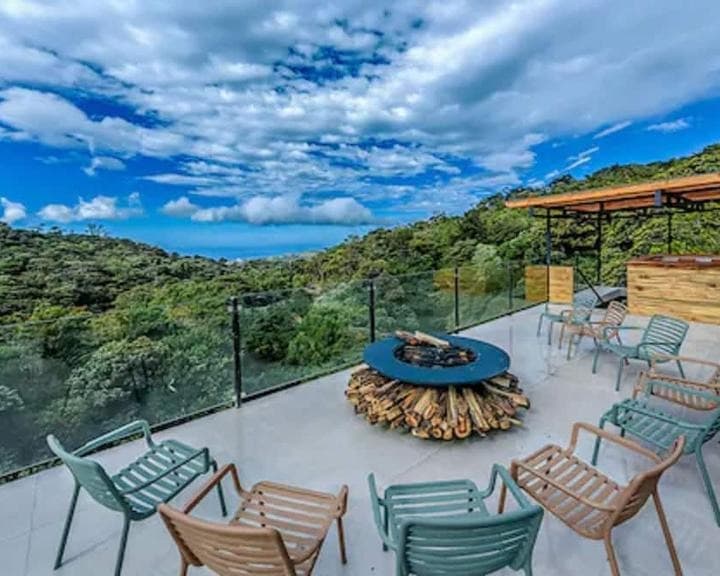
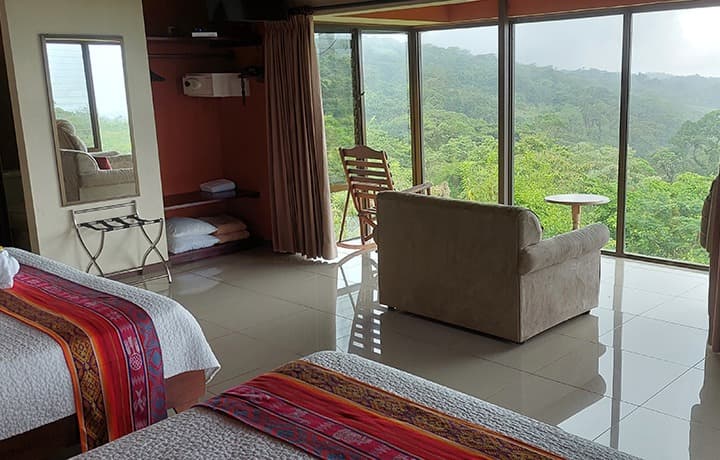
The most logical itinerary combines Arenal-Monteverde with the northern Pacific and Guanacaste (heading to the beaches after Monteverde, 3 hours' drive to Tamarindo) or with the Osa Peninsula for a contrast of cloud forest and primary rainforest. The central valley naturally fits in at the beginning or end of your stay around San José. Hotel comfort is good to very good in La Fortuna (lodges with hot spring pools, volcano views), more rustic in Monteverde where accommodation is deliberately integrated into the forest. The region suits families with children from age 6 onwards, contemplative couples as much as hikers, but it's also the terrain of choice for travellers who love alternating wildlife observation with adventure activities.