Central Valley
The 1,200-meter plateau where two-thirds of Costa Ricans live, between the active craters of Poás and Irazú, coffee fincas and artisan villages.
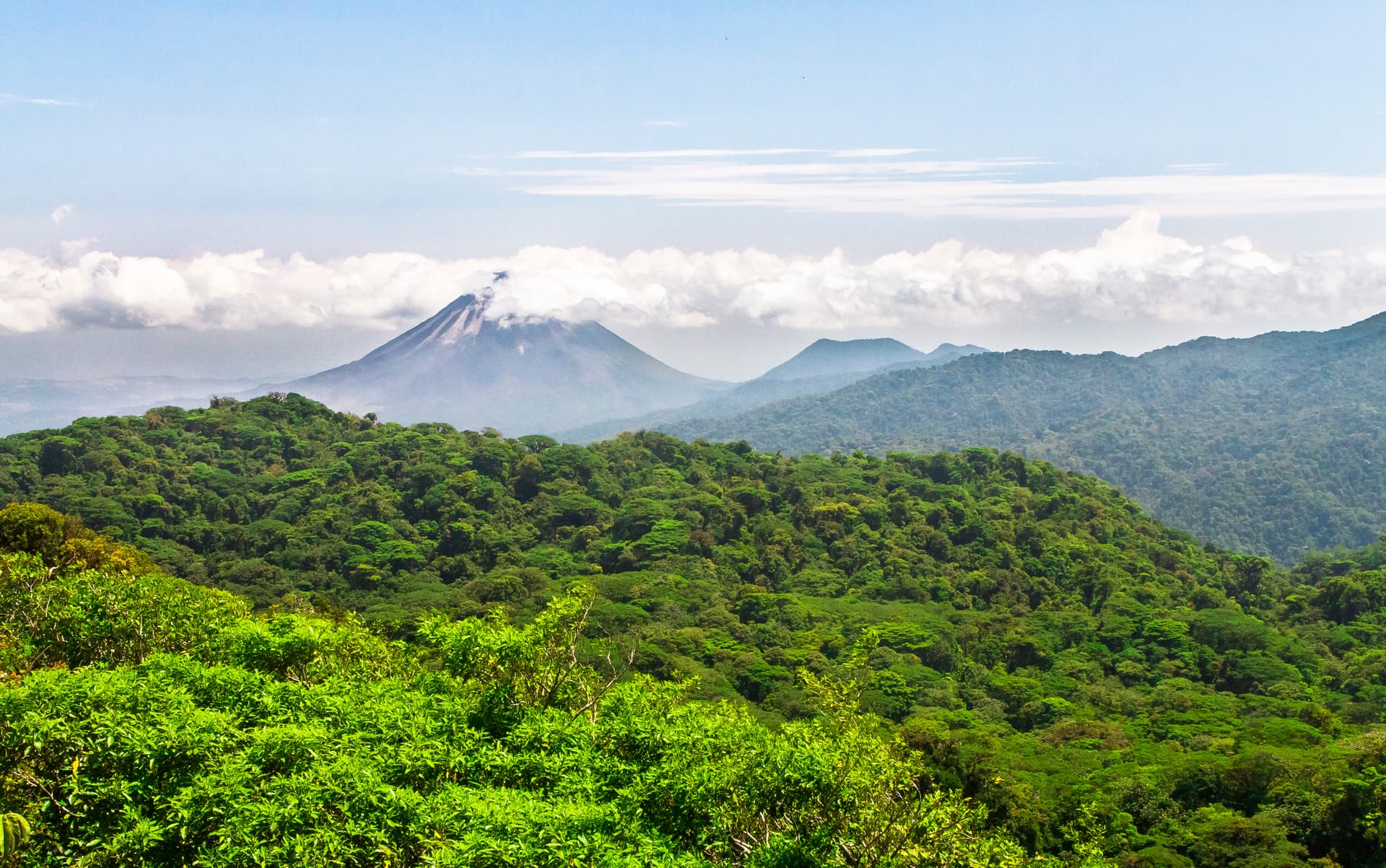
The Central Valley occupies a highland basin between 1,100 and 1,500 meters, framed by four volcanoes: Poás to the northwest, Barva to the north, Irazú to the east, and Turrialba, which still smolders intermittently. It is on this plateau that nearly two-thirds of Costa Ricans live, around four main cities: San José, the capital, Alajuela, which adjoins the Juan Santamaría international airport, Heredia, and Cartago, the old colonial capital founded in 1563.
The climate here is temperate year-round, around 22 to 24°C during the day and 14 to 16°C at night. This mildness owes to the altitude: you are far from the humid heat of the coasts. Rain falls mostly between May and November, in late afternoon, leaving clear mornings for excursions to the peaks. The volcanic soils of the valley are among the most fertile in the country, which explains the historical concentration of agricultural and human activity on this plateau.
Coffee has shaped the landscape and society here since the 1830s. The slopes between 1,200 and 1,700 meters bear the arabica varieties that made the country's reputation. Large fincas like Doka Estate on the slopes of Poás, or Hacienda Alsacia, operated by Starbucks near Alajuela, open their coffee plants, drying facilities, and roasting rooms to visitors. The harvest runs from October to February, a period when red cherries cover the rows and seasonal workers, often Nicaraguan and Ngäbe, descend from the mountains.
Valley craftsmanship concentrates in two villages to the northwest. Sarchí is known for its carretas, ox-drawn carts painted with colorful geometric designs inscribed on UNESCO's intangible cultural heritage list. The Chaverri family workshops have worked there since 1903. Grecia, a few kilometers away, is home to an entire church made of dark red painted sheet metal, imported from Belgium in 1897 and assembled piece by piece. In Cartago, the Basilica of Nuestra Señora de los Ángeles attracts nearly a million pilgrims each August 2nd who walk from San José to venerate the Virgen de los Ángeles, patroness of the country.
San José itself can be explored in half a day. The central market, active since 1880, displays stalls of gallo pinto, tamales, chorreadas, and tropical fruits in a covered maze. The Barrio Amón neighborhood preserves some early 20th-century mansions of coffee planters, and the Pre-Columbian Gold and Jade museums exhibit pieces from the Chorotega, Diquís, and Huetar cultures, including the famous stone spheres from the south of the country.
Many travelers pass through the Central Valley without stopping, eager to reach Arenal or the Pacific. Our English-speaking team recommends dedicating two full days at the beginning or end of your stay: enough time to understand how coffee has shaped the country, climb to an active crater, and grasp tico culture before or after immersing yourself in nature.
What to discover
Poás volcano crater. An asphalt road climbs to 2,700 meters to a viewpoint overlooking an acidic crater 1.3 kilometers in diameter, whose turquoise waters constantly emit sulfurous fumes. Visit early in the morning before clouds obscure the view.
Coffee finca on the slopes of Poás. Guided tour of a plantation like Doka Estate: follow the journey from cherry to cup, through open-air drying facilities and roasting, with comparative tastings of different altitude profiles.
Painted carts of Sarchí. The Eloy Alfaro workshops open their doors: watch artisans hand-paint rosettes and geometric patterns on wooden wheels, a technique passed down for four generations.
Irazú summit at 3,432 meters. The country's highest point accessible by car. On clear days, especially in the dry season between January and April, you can see both oceans from the edge of the main crater.
San José central market. Four covered hectares where you dine at the counter of a traditional soda: casado with chicken, agua de sapo with ginger, and coffee filtered through a cloth chorreador.
When to go
The dry season runs from December to April: clear skies in the morning, temperatures of 22 to 25°C during the day in San José, cool nights around 14°C. This is the best time for the volcanoes, whose craters remain clear longer before midday cloud formation. January and February offer the most stable visibility of both oceans from Irazú.
The green season, from May to November, brings concentrated showers in late afternoon, rarely in the morning. Landscapes are greener and coffee fincas are in full blooming (May-June) then harvesting (October-November) activity. September and October experience the most rainfall, up to 300 mm monthly on the Barva slopes, which can compromise views from the peaks. Note that altitude keeps evenings always cool: bring a fleece even in the dry season.
Practical advice
Two full days are enough to grasp the region: one day volcano plus coffee finca (Poás and Doka, or Irazú and a Cartago finca), one day San José plus Sarchí and Grecia. The Juan Santamaría international airport is in Alajuela, at the heart of the valley, making it the natural entry point for your stay. Most of our itineraries begin or end there, with the valley sandwiched between two more nature-focused regions.
The most logical combination is with Arenal and Monteverde, 2h30 and 3h30 drive away respectively, then descending toward the northern Pacific or the Osa Peninsula. The Caribbean coast is reached from Cartago via the Turrialba road in 3h30. Comfort is at its highest here in the country: boutique hotels in former coffee fincas, family lodges in Escazú or Santa Ana, quality restaurants in San José. The region is particularly suited to travelers seeking to understand Costa Rican culture beyond landscapes, coffee enthusiasts, and families who appreciate a gentle start before the heat of the coasts.