Arenal Volcano National Park
Arenal Volcano National Park
A young stratovolcano that entered dormancy in 2010, Arenal dominates a national park accessible from La Fortuna: lava trails, rainforest and hot springs.
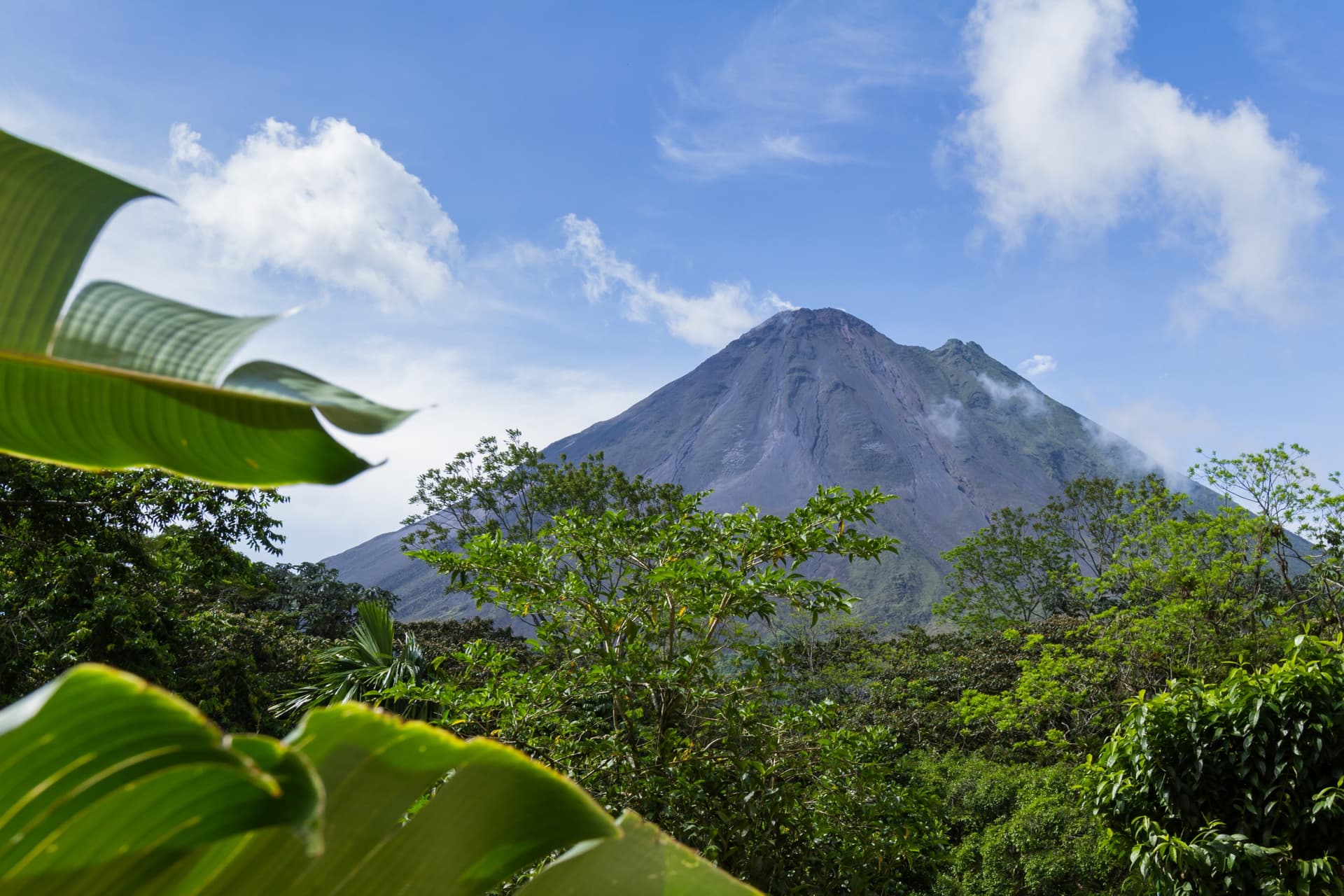
Arenal volcano, long an icon of Costa Rica's glowing eruptions, entered dormancy in 2010. Its nearly perfect cone now dominates a national park combining lava trails, humid forest, hot springs and wildlife observation, just 25 minutes from La Fortuna in Alajuela province.
Why visit Arenal Volcano National Park
The site concentrates everything that defines the volcanic landscapes of northern Costa Rica: a young and symmetrical stratovolcano, frozen lava flows, a reservoir lake, dense tropical forest and geothermal activity still palpable around the massif. In a single day you can combine hiking, birdwatching and hot spring bathing, making Arenal a central stop on a Costa Rica itinerary.
Summit ascent remains prohibited for safety reasons, but the trails on the western slope, neighboring private reserves and viewpoints provide ample opportunity to approach the mountain from multiple angles.
Geological history of Arenal Volcano
Arenal is Costa Rica's youngest stratovolcano. It had been dormant for roughly 500 years when, on July 29, 1968, following an earthquake, it erupted violently. Residents who worked small farms on its slopes had not anticipated the catastrophe: more than 87 people died and several villages were destroyed.
Reaching 1,720 meters in elevation, the volcano remained active for more than four decades, with regular lava flows and explosions that earned it considerable tourism renown. In 2010, its activity ceased and it is today considered inactive. The national park was established in 1991 to protect the cone, recent lava flows and the forest recolonizing them.
What to see and do
National park trails
From the main entrance, two short trails allow you to approach the charred western slope:
- Las Coladas Trail (2 km): it follows a lava flow dating from 1992 and leads to a viewpoint overlooking the cone and Lake Arenal.
- El Ceibo Trail (1.8 km): a forest loop passing beneath two remarkable trees, a giant ceibo and strangler fig.
The walk remains accessible, without significant elevation gain. Plan 2 to 3 hours to combine both itineraries.
Arenal 1968 private reserve
North of the national park entrance, this private reserve offers more than 30 km of hiking trails and cycling paths through cooled lava flows and secondary forest. You can reach Lake Los Patos, formed after the 1968 eruption, where caimans and aquatic birds are frequently observed.
Arenal Observatory Lodge and Cerro Chato
South of the volcano, Arenal Observatory Lodge occupies buildings from a former scientific research station. Its pavilion overlooks the cone's southern face and serves as a trailhead for several paths, including the demanding ascent of Cerro Chato, an extinct neighboring volcano whose crater harbors a lagoon.
Around the park
The region also concentrates well-developed supplementary activities: natural hot springs or developed ones along the Tabacón river, zip-lines and suspension bridges in the canopy, white-water rafting on nearby rivers, and observation of sloths and toucans in surrounding forests.
Practical information
- Hours: open year-round during daylight. Verify exact hours before your visit, as they vary by season.
- Rates: paid entrance in dollars, reduced rates for children. Prices are regularly adjusted by SINAC.
- Duration of visit: plan a half-day for the national park alone, a full day if combining with Reserve 1968 or hot springs.
- Equipment: hiking shoes, waterproof clothing, water, insect repellent. Rain showers are frequent even during the dry season.
When to go
The dry season, from November to April, offers the best visibility of the cone, which remains frequently shrouded in clouds for the rest of the year. Trails are more passable and showers are shorter. The green season (May to October) ensures lush vegetation and fewer crowds, at the cost of more unpredictable visibility of the summit. Morning, before 10 a.m., generally offers the best chances of seeing the cone clear.
How to get there
The national park entrance is located approximately 25 minutes by car from La Fortuna, the region's tourism hub.
- From San José: 90 km northwest, approximately 2.5 hours by car via highway. By regular bus to La Fortuna, plan approximately 4 hours.
- From Monteverde: the standard route passes across Lake Arenal, via a combined bus-boat-bus arrangement (approximately 3 hours).
- On site: a rental vehicle facilitates access to the park, private reserves and hot springs; roads are generally in good condition.
See also in the region and across Costa Rica
Arenal volcano fits naturally into a larger circuit through the country's natural parks:
- The Monteverde Biological Reserve, a cloud forest accessible from Lake Arenal.
- The Tortuguero National Park, on the Caribbean coast, for canals and turtle nesting.
- The Manuel Antonio National Park, which combines forest and beaches on the Pacific coast.
- The Proyecto Asis rescue center, nearby, to understand local wildlife.
Frequently asked questions
Frequently asked questions
No. After a long active phase triggered in 1968, it returned to dormancy in 2010 and is today considered inactive. Geothermal activity persists beneath the surface, however, responsible for the region's hot springs.
No, ascent of the cone is prohibited for safety reasons. Hikers explore trails on the western slope, lava flows and Cerro Chato, a neighboring extinct volcano.
A half-day is sufficient for the main national park trails. To combine with Arenal 1968 Reserve, hot springs and a viewpoint, plan two to three days based in La Fortuna.
November to April, during the dry season, preferably early morning. The cone often remains shrouded in clouds in the afternoon, regardless of season.
Yes. The Las Coladas and El Ceibo trails are short, gently sloped and marked. The region also offers family-friendly activities such as suspension bridges and thermal baths.
Plan your trip
Arenal volcano fits naturally into a circuit combining volcanoes, cloud forests and Pacific or Caribbean coasts. To build a tailor-made itinerary, consult our Costa Rica journeys.
Interested in this visit?
We can include it in your personalised itinerary.