What are the iconic animals of Costa Rica to see on a trip?
Looking to encounter the incredible wildlife of Costa Rica? Discover the iconic animals
Looking to encounter the incredible wildlife of Costa Rica? Discover the iconic animals you can see on a trip to Costa Rica and all the places where you can easily observe them in their natural habitat.
1. Monkeys
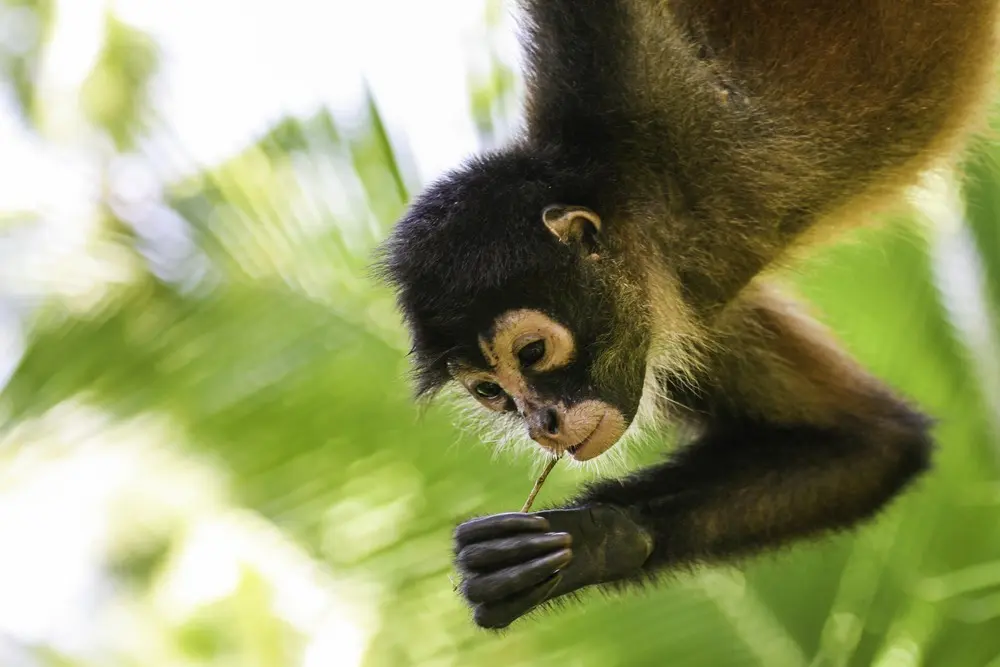
There are 4 species of monkeys in Costa Rica :
the howler monkey, recognizable by its shrill cry audible for kilometers,
the capuchin, renowned for its exceptional intelligence,
the spider monkey, an endangered species famous for its incredible agility,
the squirrel monkey, tiny monkeys measuring only about 30 centimeters.
Where to see monkeys in Costa Rica?
To see monkeys in Costa Rica, head to the country's national parks. You can observe all 4 species at Manuel Antonio National Park, where animals are accustomed to human presence. You can also visit the national parks of Tortuguero, Monteverde, Corcovado, Cahuita, or Carara.
2. The sloth
A trip to Costa Rica wouldn't be complete without seeing sloths! These mammals, the slowest on the planet, are undoubtedly the most anticipated wildlife encounter on a Costa Rica trip. There are two species :
Hoffmann's sloth (or two-toed sloth) : rather nocturnal, it's easier to observe after nightfall,
The brown-throated sloth (or three-toed sloth) : its fur is darker and it's more easily spotted during the day.
Where to see sloths in Costa Rica?
The largest sloth populations in Costa Rica are found on the southern Pacific coast, on the Osa Peninsula, in Corcovado National Park, and in Manuel Antonio National Park.
3. The red-eyed tree frog
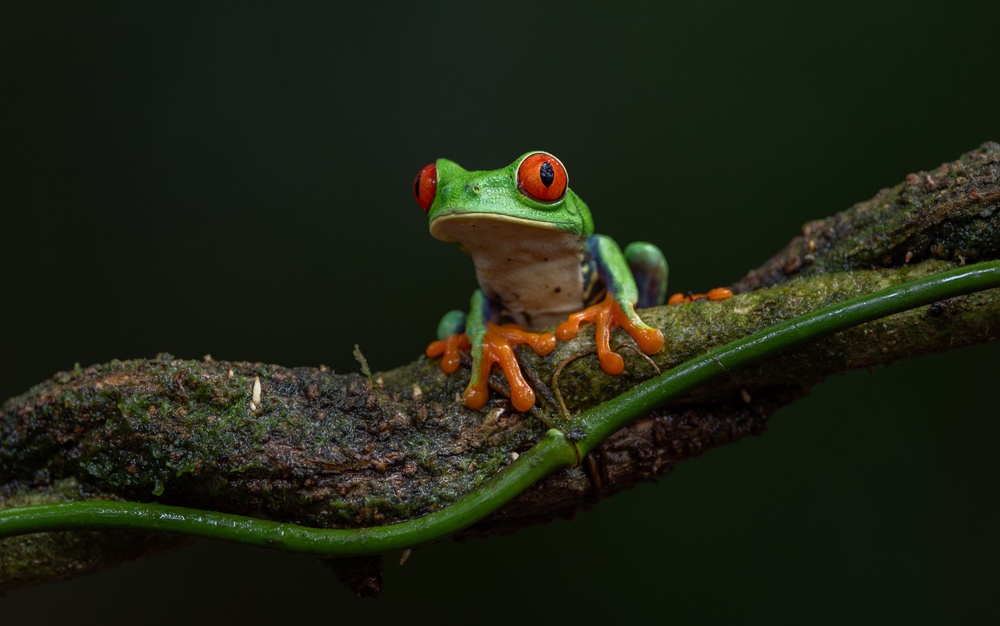
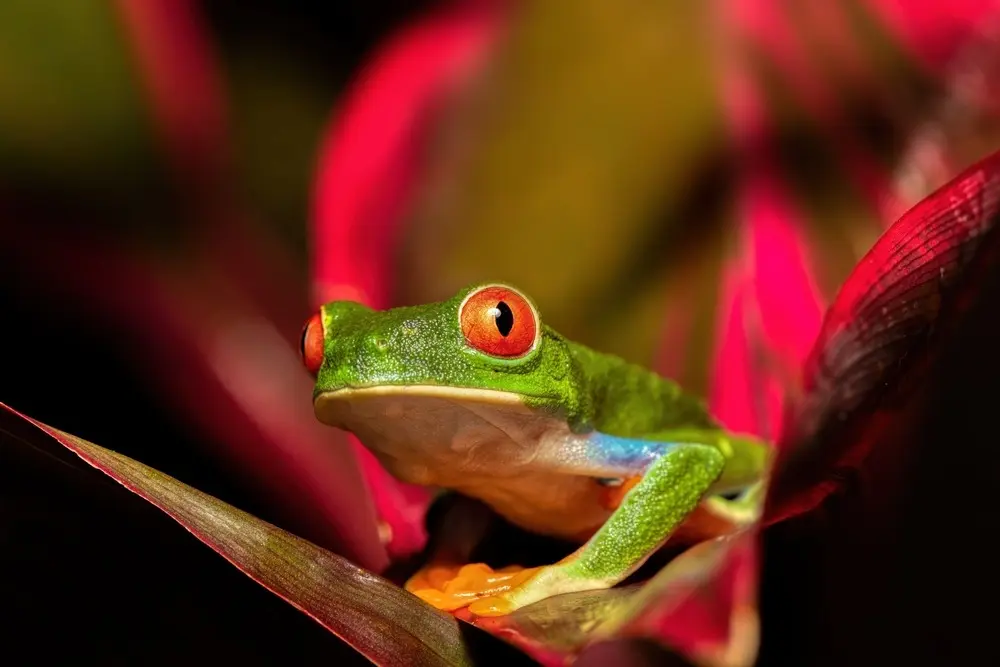
Costa Rica is home to about a hundred frog and toad species, the most iconic being the famous red-eyed tree frog. Characterized by large red eyes and a multicolored body, the red-eyed tree frog is a nocturnal amphibian species, primarily observed at night. It's therefore advisable to take a night safari with a guide to have a chance of seeing it!
Where to see red-eyed tree frogs in Costa Rica?
The red-eyed tree frog is primarily found in tropical rainforests near a water source such as a river, lake, or stream. You can easily spot one during a night tour at Corcovado National Park or Poás Volcano National Park.
4. The white-nosed coati
Curious and unafraid, the coati is a mammal from the raccoon family. About the size of a large cat, it's characterized by thick fur and a long, pointed snout. In Costa Rica, there is one coati species: the white-nosed coati. You can encounter it along roadsides, in forests, and in the mountains.
Where to see the white-nosed coati in Costa Rica?
To see the white-nosed coati in Costa Rica, you can visit Manuel Antonio National Park or Cahuita National Park. You can also find them in the Guanacaste province or near Arenal Volcano.
5. Sea turtles
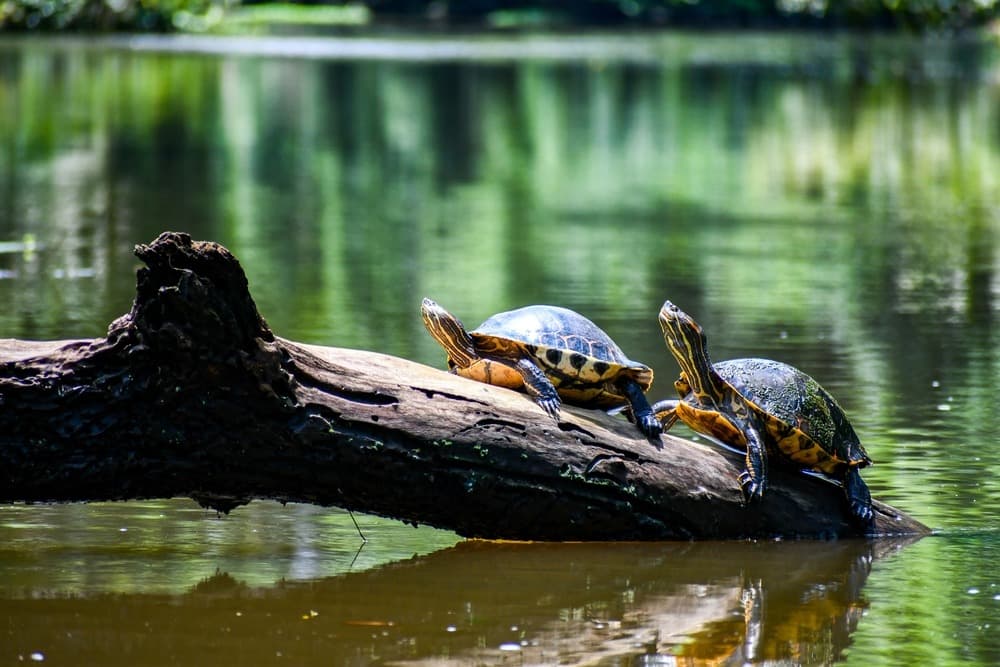
Costa Rica is home to several species of sea turtles. Among them, you can find :
The leatherback turtle : able to reach up to 2 meters and weigh nearly 450 kg, it's the most impressive.
The green turtle : the most common and well-known species,
The hawksbill turtle : this endangered species is one of the rarest,
The black turtle : also called the black sea turtle due to its shell color, it's unfortunately an endangered species,
The Ridley turtle : small in size, it's recognizable by its gray color.
The best time to see turtles in Costa Rica is during the egg-laying season. If you wish to experience this magical moment, we can only recommend hiring an environmentally conscious local guide or visiting one of the turtle protection sanctuaries.
Where to see turtles in Costa Rica?
Here are the best places to see turtles in Costa Rica :
Tortuga Station between April and August,
The Tortuguero National Park between June and September,
Gandoca Manzanillo Refuge between April and May,
Las Baulas Marine Park between December and January,
Ostional Refuge between July and December,
Corcovado National Park between October and December.
6. Crocodiles
Costa Rica is home to two crocodile species :
The American crocodile : able to reach up to 7 m long and weigh 400 kg, they are the most impressive.
The caiman : smaller and more discreet than American crocodiles.
Where to see crocodiles in Costa Rica?
To see American crocodiles in Costa Rica, you can visit the Tarcoles Bridge, the famous "crocodile bridge" located on the road connecting San José to the Pacific coast and overlooking the Río Grande de Tarcoles. They can also be found in the Tamarindo estuary, at Sierpe, and in the mangroves of Tortuguero and Palo Verde parks.
As for caimans, you can easily observe them in Tortuguero National Park and Palo Verde National Park.
7. The resplendent quetzal
Considered one of the most beautiful birds in the world, the resplendent quetzal was revered by pre-Columbian civilizations. It's the males that are adorned with magnificent colors. They are distinguished by their emerald and red plumage, green crest, and long tail that can reach up to a meter in length.
Where to see the resplendent quetzal in Costa Rica?
The resplendent quetzal lives primarily at high altitudes. You can observe it in the Monteverde reserves or in Los Quetzales National Park.
8. The keel-billed toucan
Here is another characteristic bird of Costa Rica. While several toucan species are found throughout the country, the keel-billed toucan is the most popular. It's characterized by black plumage, yellow cheeks and neck, and its impressive rainbow-colored beak.
Where to see the keel-billed toucan in Costa Rica?
Tortuguero and Cahuita National Parks are the best places to see the keel-billed toucan in its natural habitat. Because it's not always easy to spot, we recommend hiring a local guide to successfully observe it.
Other animals you can see in Costa Rica
Known for the richness of its wildlife, Costa Rica contains many other wild animals beyond those mentioned above. Here are other animals to see during a trip to Costa Rica :
The anteater
This mammal is found in Tortuguero National Park on the Caribbean coast as well as in Corcovado National Park.
The jaguar
Discreet and wary, it's very rare to be able to see one. The jaguar lives primarily in reserves and national parks, such as Corcovado and Tortuguero.
The green iguana
Able to reach up to 2 m in length, the green iguana is an impressive reptile that you can encounter in Tortuguero National Park and the Limón province.
The green basilisk
This lizard species is distinguished by its emerald green color and blue spots. You can find it in Tortuguero National Park.
Whales
Costa Rica's Pacific coast is a passage route for three whale species: the humpback whale, the false killer whale, and the pilot whale. To observe them, visit (at the right time according to the species) Marino Ballena National Park, Corcovado National Park, Drake Bay, and the Gulf of Papagayo.
Sharks
The waters of the Pacific and Caribbean coasts of Costa Rica are home to several shark species including the bull shark, tiger shark, hammerhead shark, and whale shark. Perfect for scuba diving enthusiasts.
Birds
Beyond the resplendent quetzal and the keel-billed toucan, Costa Rica is home to nearly 1,000 different bird species. You can notably see hummingbirds, woodpeckers, scarlet macaws, trogons, motmots, roseate spoonbills, magnificent frigatebirds, great pelicans, great curassows, and many more...
Frequently asked questions
The dry season (December to April) is generally ideal for observing terrestrial wildlife, as animals concentrate near water sources and less dense vegetation facilitates observation. The rainy season (May to November) is in turn perfect for observing sea turtles laying their eggs on the beaches.
Manuel Antonio National Park and Corcovado National Park are the most renowned for wildlife observation. Manuel Antonio is ideal for families as animals are accustomed to humans, while Corcovado offers a wilder experience with exceptional biodiversity including jaguars, tapirs, and many rare species.
The jaguar is present in Costa Rica but is extremely discreet and wary. It lives primarily in protected areas such as Corcovado National Park and Tortuguero. The chances of observing it are very slim, even with an experienced guide, but traces of its passage (paw prints, scratch marks) can be spotted during hikes.
To observe sea turtles without disturbing them, it's strongly recommended to use a certified local guide or visit an official protection sanctuary. Night visits are conducted in small groups, with no flash photography or white light allowed. Tortuguero and Ostional Refuge parks are particularly well-managed.
The resplendent quetzal is primarily found in high-altitude cloud forests. The best observation areas are the Monteverde Reserve and Los Quetzales National Park, located in the Talamanca mountain range. The ideal observation period is between February and April, during the nesting season.
Costa Rica offers excellent diving and snorkeling opportunities to observe sharks and whales. The Pacific waters, particularly around Marino Ballena National Park and Cocos Island, are renowned for encounters with whale sharks, hammerhead sharks, and humpback whales. It's imperative to practice these activities with responsible operators respecting regulatory distances.
Frequently asked questions
The dry season (December to April) is generally ideal for observing terrestrial wildlife, as animals concentrate near water sources and less dense vegetation facilitates observation. The rainy season (May to November) is in turn perfect for observing sea turtles laying their eggs on the beaches.
Manuel Antonio National Park and Corcovado National Park are the most renowned for wildlife observation. Manuel Antonio is ideal for families as animals are accustomed to humans, while Corcovado offers a wilder experience with exceptional biodiversity including jaguars, tapirs, and many rare species.
The jaguar is present in Costa Rica but is extremely discreet and wary. It lives primarily in protected areas such as Corcovado National Park and Tortuguero. The chances of observing it are very slim, even with an experienced guide, but traces of its passage (paw prints, scratch marks) can be spotted during hikes.
To observe sea turtles without disturbing them, it's strongly recommended to use a certified local guide or visit an official protection sanctuary. Night visits are conducted in small groups, with no flash photography or white light allowed. Tortuguero and Ostional Refuge parks are particularly well-managed.
The resplendent quetzal is primarily found in high-altitude cloud forests. The best observation areas are the Monteverde Reserve and Los Quetzales National Park, located in the Talamanca mountain range. The ideal observation period is between February and April, during the nesting season.
Costa Rica offers excellent diving and snorkeling opportunities to observe sharks and whales. The Pacific waters, particularly around Marino Ballena National Park and Cocos Island, are renowned for encounters with whale sharks, hammerhead sharks, and humpback whales. It's imperative to practice these activities with responsible operators respecting regulatory distances.