Caño Negro National Wildlife Refuge
Caño Negro National Wildlife Refuge
A vast Ramsar-classified wetland in Costa Rica's northern plains, Caño Negro refuge is one of Central America's premier sites for observing aquatic birds, best explored by boat on the Río Frío.
Caño Negro National Wildlife Refuge sprawls across Costa Rica's northern plains, bordering Nicaragua. This expansive wetland system—lagoons, rivers and flooded forests—harbors one of Central America's greatest concentrations of aquatic birds. Far removed from standard tourist circuits, it attracts ornithologists, anglers and lovers of pristine wilderness.
Quick Reference
- Entrance: Paid entry fee (managed by SINAC)
- Access: Caño Negro village reachable from Los Chiles by paved road; Los Chiles connected to La Fortuna by road
- Recommended duration: Half-day to full day depending on chosen activities
- Best time: Dry season (December–April) for peak bird concentrations around residual lagoons
- Attire: Light long-sleeved clothing, insect repellent essential
What You'll See
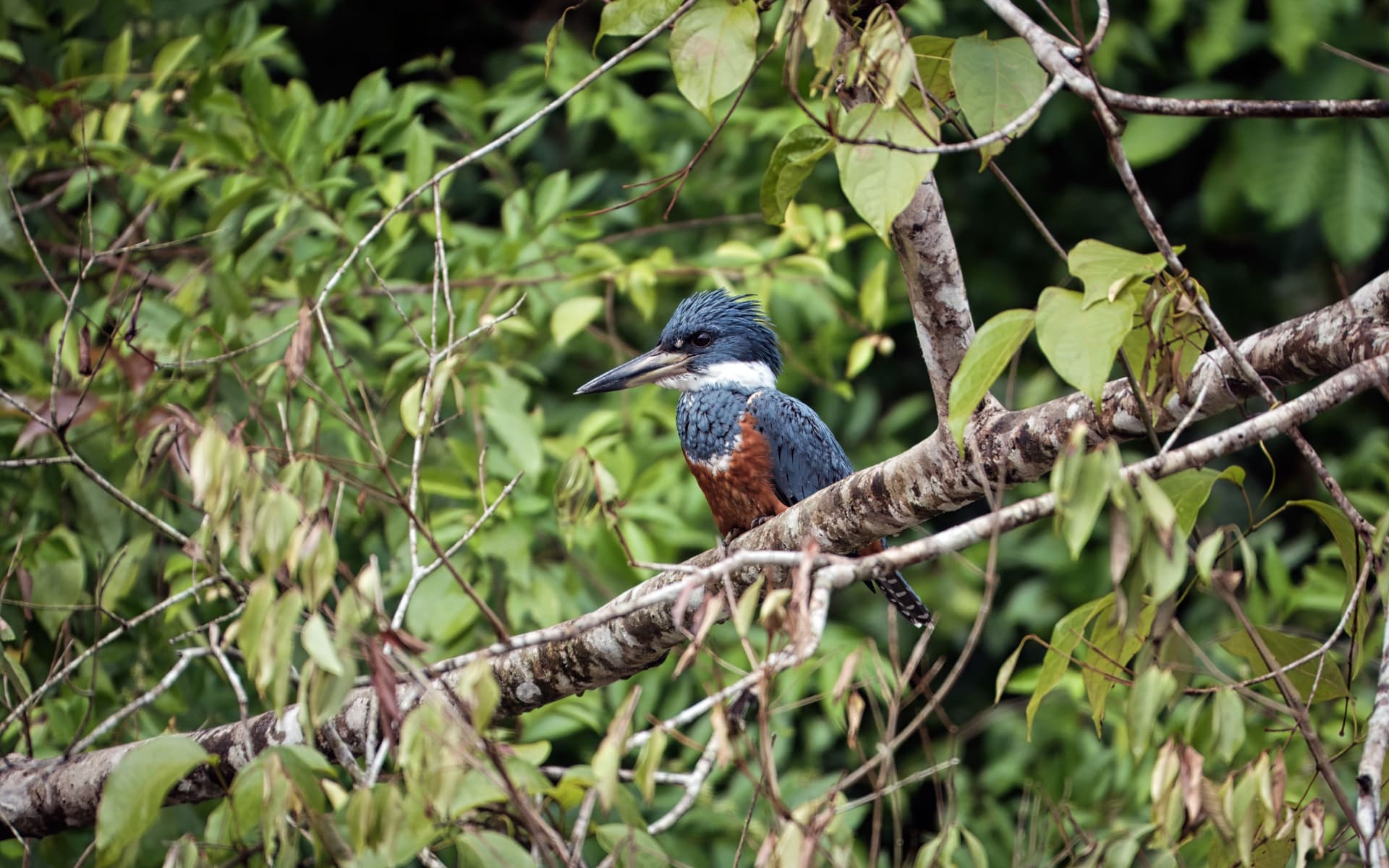
The refuge encompasses roughly 10,000 hectares of wetland. Caño Negro lagoon, the site's centerpiece, fills during the rainy season and attracts thousands of migratory and resident birds. Commonly observed species include:
- Anhinga, roseate spoonbill, scarlet ibis, tiger heron
- Jabiru (giant stork, the refuge's symbol)
- Spectacled caimans and turtles along the banks
- Howler monkeys and capuchin monkeys in the riparian canopy
- West Indian manatees in the Río Frío (documented presence, rare to observe)
History and Context
Established in 1984, the refuge was designated a wetland of international importance under the Ramsar Convention in 1991. The Río Frío, the site's main artery, connects the refuge to Lake Nicaragua. The region was traditionally frequented by local fishermen; sport fishing for gar (alligator fish) and snook remains a regulated activity in certain zones.
Highlights of a Visit
Boat Tour on the Río Frío
Visits are conducted almost exclusively by slow-speed motorboat. Local guides navigate beneath low branches, approaching caimans and nesting bird colonies within mere meters. This is the standard format and most effective way to observe wildlife.
Early Morning Bird Watching
The first hours after sunrise concentrate avian activity. During the dry season, residual lagoons gather hundreds of individuals from multiple species simultaneously—a spectacle rarely matched elsewhere in Costa Rica.
Guided Sport Fishing
The refuge permits fishing in designated zones and seasons. Gar, a primitive fish with prehistoric appearance, is the emblematic catch. Local guides from the village organize dedicated outings.
Photography Tips
Golden light during the first two hours after sunrise is ideal. From the boat, a telephoto lens (300 mm or longer) allows you to photograph birds without disturbance. Protect your gear from ambient humidity with a waterproof bag. During rainy season, dense vegetation limits clear angles.
Location and Access
Caño Negro village lies in Los Chiles canton, Alajuela province, in Costa Rica's northern plains. The most common approach runs from La Fortuna / Arenal toward Los Chiles, then Caño Negro. The road is passable in a standard vehicle during the dry season; a high-clearance vehicle is recommended during rainy season. No frequent public transport directly serves the village; most visitors arrive on an organized tour or in a rental car. Local guides and boatmen operate from the village itself.
Nearby
- Arenal Volcano — a few hours' drive away, a classic departure point before or after visiting Caño Negro.
- La Fortuna — the regional hub with accommodations, restaurants and agencies offering excursions to the refuge.
- Tenorio National Park (Río Celeste) — another wetland and tropical forest accessible from the same northern region.
Frequently asked questions
The dry season (December through April) is optimal: lagoons shrink and concentrate aquatic wildlife, facilitating sightings. During rainy season, the refuge is greener but birds are more dispersed.
Independent access to the refuge is possible, but a boat tour with a local guide is strongly recommended: they know where wildlife concentrates and navigate the Río Frío safely.
Yes, many La Fortuna agencies offer full-day excursions including travel, a boat tour and return. The distance is substantial; plan for a full day.
Tropical wetlands host numerous mosquitoes, particularly during rainy season. A potent insect repellent and long-sleeved clothing are essential, regardless of season.
Sport fishing is permitted in certain zones under regulatory conditions. Local guides from the village organize dedicated outings and know the rules in effect.
Boarding a boat from the banks may be difficult for people with reduced mobility. Village infrastructure remains basic; it is advisable to contact local operators in advance to assess options.
Interested in this visit?
We can include it in your personalised itinerary.