The Best Diving Spots in Costa Rica
Costa Rica is home to 6% of the world's biodiversity and 3.5% of known marine species. Renowned for its pristine coral reefs teeming with tropical fish, it's also a prime destination for spotting pelagic species. Discover the best diving sites Costa Rica has to offer.
04 Jan 2024Costa Rica is home to 6% of the world's biodiversity and 3.5% of known marine species. Renowned for its pristine coral reefs teeming with tropical fish, it's also a prime destination for spotting pelagic species. We invite you to discover the best diving sites Costa Rica has to offer.
Cocos Island, a Paradise for Pelagic Encounters
Cocos Island is a small, uninhabited volcanic island located 500 km southwest of Costa Rica. Known worldwide as a diving destination, it's considered one of the best—if not the best—diving sites in Costa Rica.
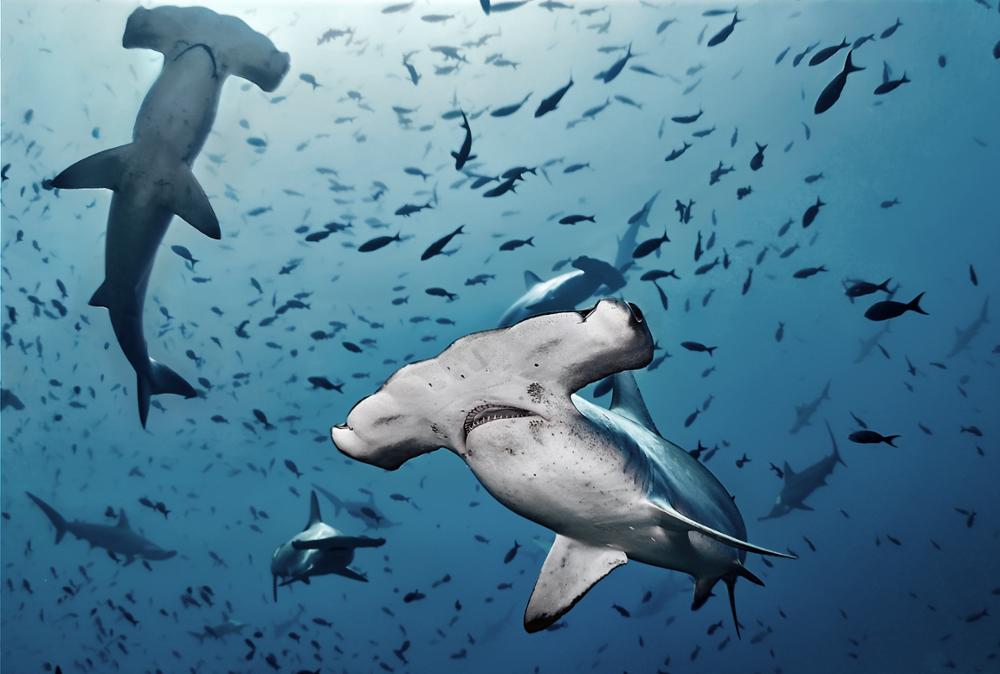
Nicknamed "the little Galápagos," Cocos Island boasts the world's second-highest biomass (after the Galápagos Islands). Here, you can encounter numerous pelagic species including: scalloped hammerhead sharks, Galápagos sharks, bull sharks, tiger sharks, manta rays, whale sharks, dolphins, and sea turtles.
A UNESCO World Heritage Site, access to Cocos Island is strictly controlled—only certain liveaboard dive vessels are permitted. This makes it a rarely visited and exceptionally well-preserved diving destination. Note that it takes more than 30 hours of boat travel to reach the island.
What diving level is required?
Given its remoteness, occasionally strong currents, and the depth of dive sites, Cocos Island is best suited for experienced divers.
What's the best time to dive around Cocos Island?
While diving at Cocos Island is possible year-round, we recommend visiting during the rainy season (June to November), when pelagic species are most abundant.
Caño Island, an Ultra-Pristine Natural Aquarium
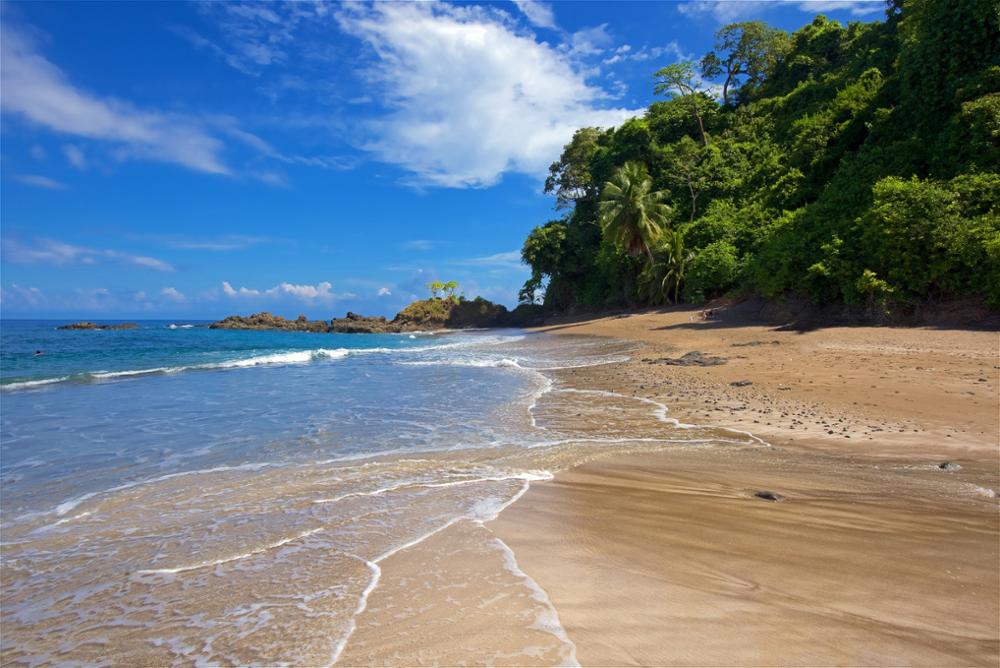
Located in Puntarenas Province, 20 km from Drake Bay and 16 km from the Osa Peninsula, Caño Island has been part of a protected reserve since 1978. Once a burial site, it harbors an ancient pre-Columbian cemetery. But what captures our attention here are its magnificent coral reefs, which shelter an incredible diversity of marine life.
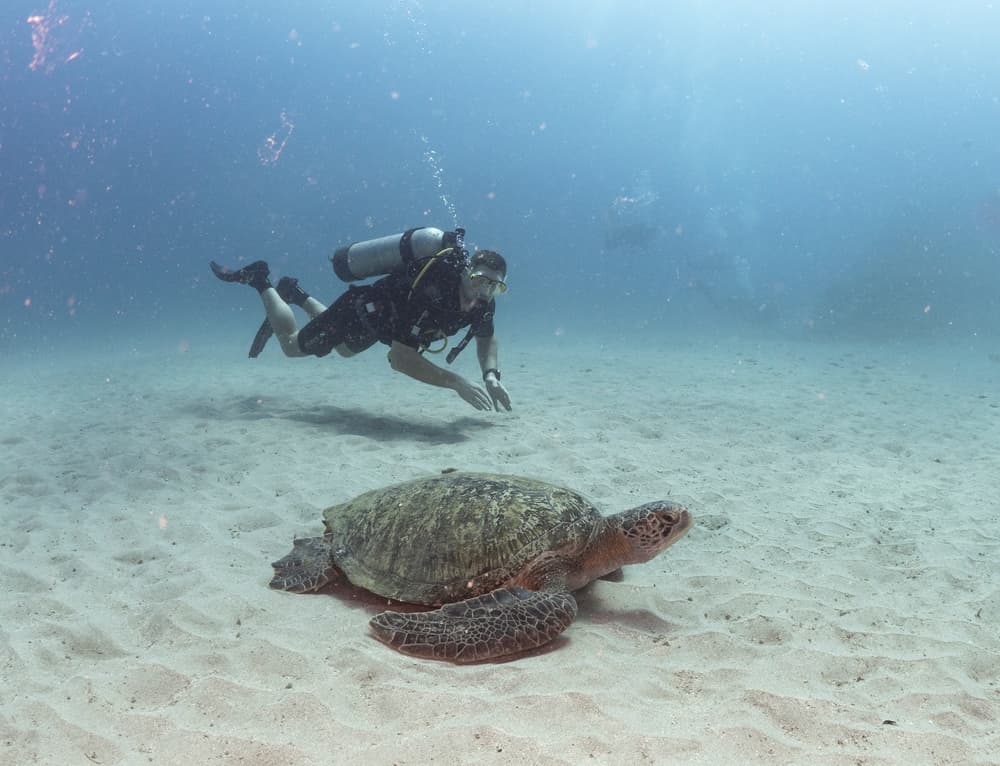
Through pinnacles, drop-offs, and other rock formations, numerous species thrive: barracudas, groupers, snappers, moorish idols, tuna, pufferfish, moray eels, sea turtles, and white-tip reef sharks.
It's also possible to encounter dolphins during the boat ride, and occasionally humpback whales and pilot whales. These species pass through Drake Bay for a few months each year during migration.
Attention! Access to Caño Island's dive sites is limited to preserve this sanctuary. Only 10 divers are allowed in the water at the same time. Be sure to reserve your dive in advance.
What diving level is required?
With shallow coral reefs, Caño Island is accessible to all diving levels.
What's the best time to dive around Caño Island?
The best diving season at Caño Island is between January and June. However, if you wish to see humpback whales, plan your visit for August and September.
Bat Islands (Islas Murciélagos), Refuge of the Bull Sharks
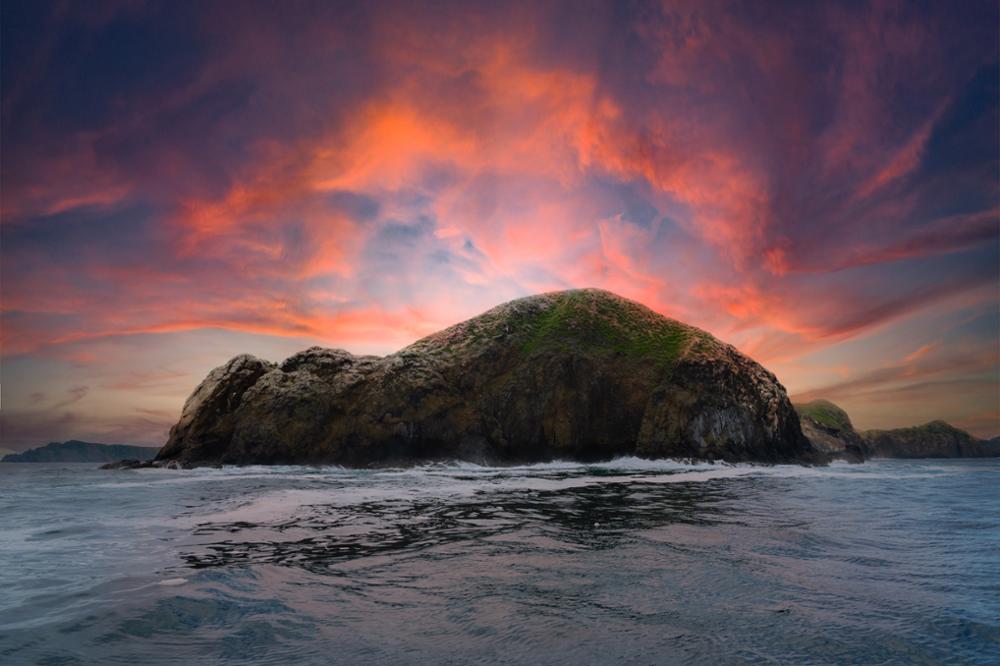
Located in the northwest of Costa Rica, in the Guanacaste region, the Bat Islands archipelago (also called Islas Murciélagos) comprises 5 main islands and 10 smaller ones. It's a protected zone that forms part of Santa Rosa National Park.
This area is particularly renowned for hosting a large population of bull sharks, a species that can reach up to 4 meters in length! Beyond these impressive creatures, you'll find numerous ray species (eagle rays, mobula rays, manta rays, leopard rays...) as well as immense schools of fish (notably jacks).
Departing from Playas del Coco, the Bat Islands dive sites are accessible in less than an hour by boat from shore.
What diving level is required?
Diving conditions at Murciélago Island aren't always straightforward: visibility can be variable, currents may be strong at times, and you need to be comfortable with deep and drift dives. All of which explains why the Bat Islands' dive sites are better suited for experienced divers.
What's the best time to dive around the Bat Islands?
The best time to dive around the Bat Islands, especially if you want to maximize your chances of seeing bull sharks, is from May to November.
Catalina Islands, Garden of Eden for Giant Rays
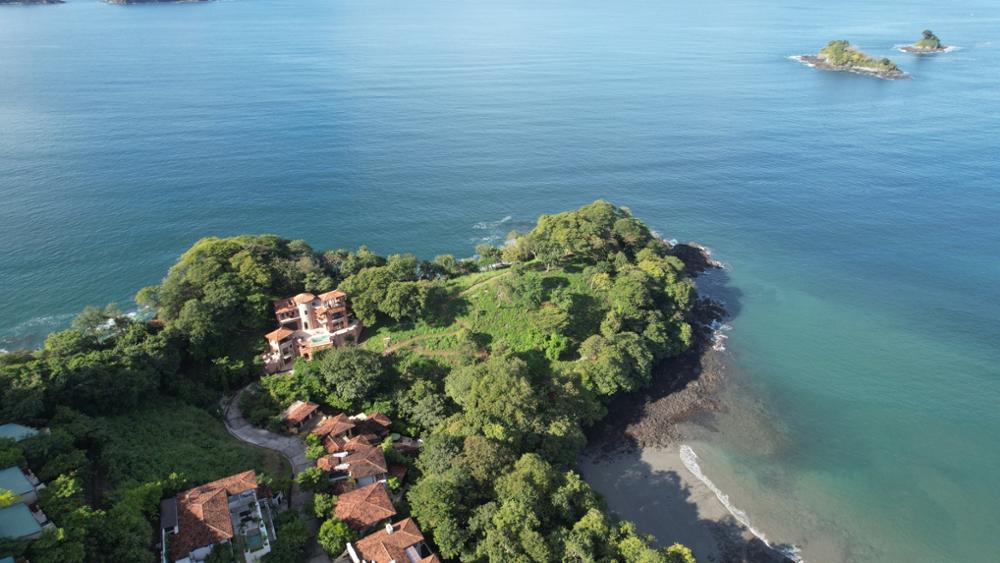
Also located off the northwest Pacific coast of Costa Rica, in Guanacaste Province, the Catalina Islands form an archipelago of rocky islets. They rank among Costa Rica's premier dive sites because they're home to a significant population of giant manta rays.
You'll also find other ray species (eagle rays, mobula rays, stingrays, electric rays, bat rays, manta rays...) as well as sea turtles, octopuses, moray eels, and much more.
Diving the Catalinas means thrilling encounters as you navigate through arches, caves, and caverns or immerse yourself along the reef of The Wall dive site.
What diving level is required?
With strong currents and the depth of dive sites, the Catalina Islands are best suited for experienced divers.
What's the best time to dive around the Catalina Islands?
The best time to dive around the Catalina Islands is from November to May. This is when your chances of observing giant manta rays are greatest.
Tortuga Island, the Wreck Spot for Beginner Divers
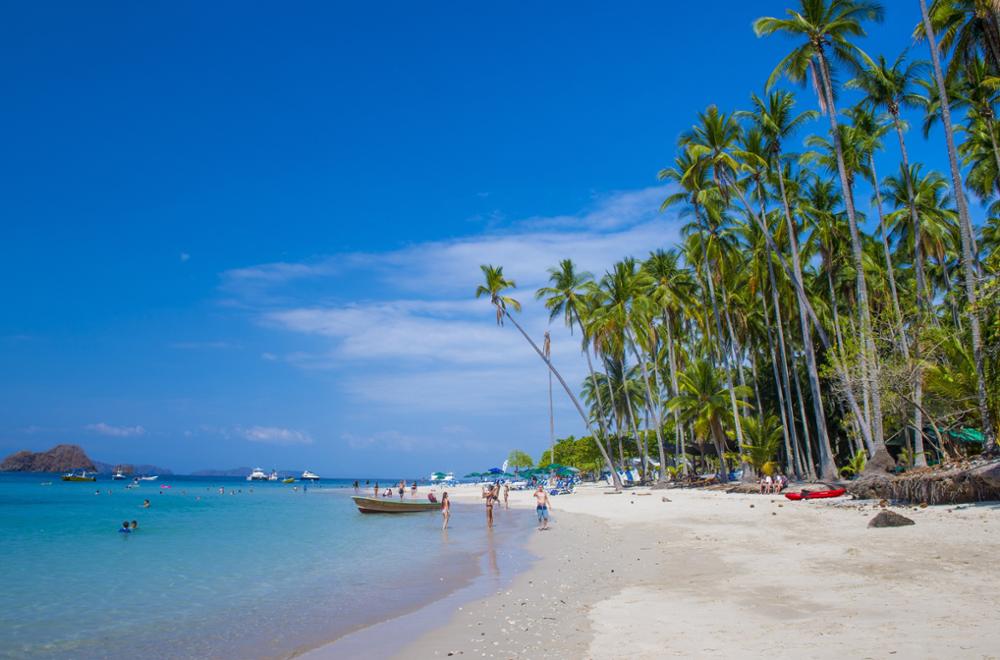
Head to the Gulf of Nicoya to discover Tortuga Island, one of Costa Rica's best diving sites for beginner divers, snorkeling enthusiasts, and wreck diving lovers.
Marine life here is abundant: moray eels, porcupinefish, angelfish, butterflyfish, sergeant majors, large schools of jacks and snappers, and occasionally white-tip reef sharks.
As for wrecks, the site features 3 relatively shallow wrecks:
- The Coronel Lafonso Monge, a 65-ton former coast guard vessel located at just 16 meters depth;
- The Franklin Chang Diaz, another former Coast Guard ship;
- The Caroline Star, the deepest wreck in the region with a maximum depth of 30 meters.
What diving level is required?
With shallow, easily accessible dive sites from shore, Tortuga Island is perfect for beginner divers and snorkeling enthusiasts.
What's the best time to dive around Tortuga Island?
You can dive at Tortuga Island year-round.
Florine Dergelet
Florine DergeletWeb writer for over 10 years, Florine Dergelet is a traveler driven by the desire to explore the world with an open heart. Each of her articles is an invitation to slow down, listen, and understand. For her, travel isn't about checking countries off a map—it's about weaving connections (often invisible but always powerful) with places, peoples, and all manner of creatures. Her creed? To advise travelers ethically, awaken their consciousness about animal welfare and cultural respect, and highlight the importance of humble, sustainable tourism. Because the most beautiful memories are often born far from the spotlight, in the shadow of a trail, in the warmth of a conversation, or in the quiet breath of a world we finally take time to listen to…